Kidney Organoid Applications
- Human-Relevant Kidney Model
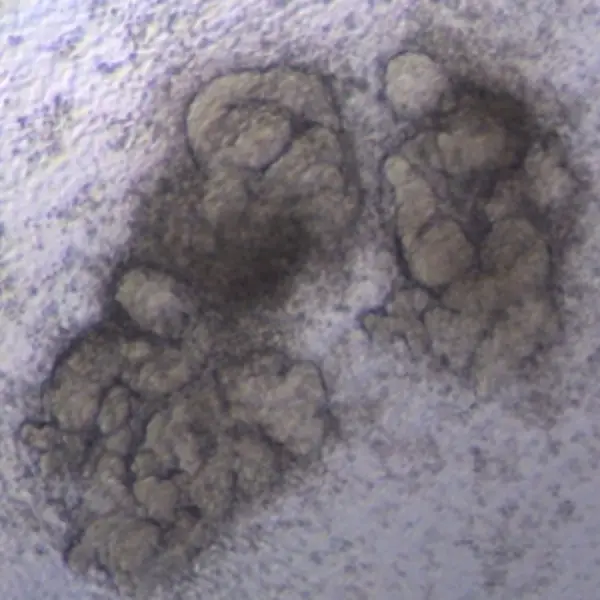
Kidney organoids provide a human-derived in vitro renal model suitable for studying kidney biology, cellular responses, and tissue-level mechanisms in a controlled 3D environment.
- Nephrotoxicity Testing
The model can be used to assess renal responses to compound exposure, supporting nephrotoxicity screening and exploratory safety evaluation during drug development.
- Disease Modeling
Kidney organoids enable investigation of disease-associated processes and mechanistic pathways relevant to renal disorders in a human in vitro context.
Key Features
Differentiation of the Vascularized and Mature Kidney Organoids
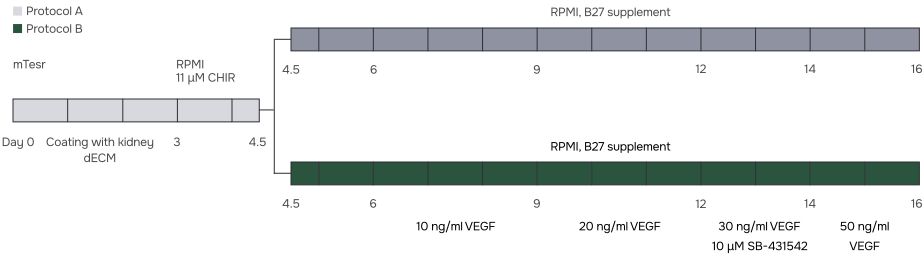
- The kidney organoids generated by protocols A and B had tubular structures, and their size was greater than the kidney organoids without kidney dECM.
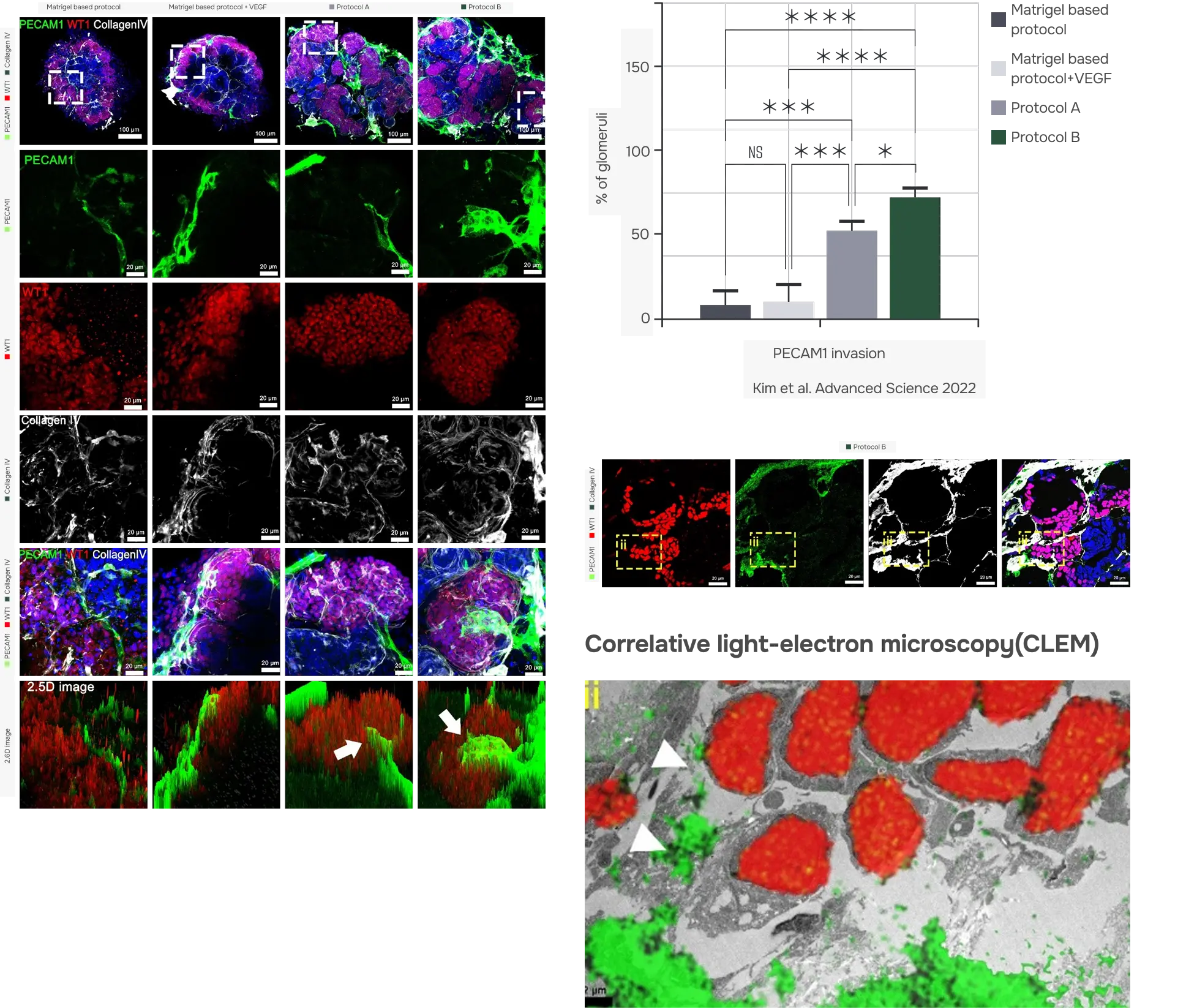
- The vascularization was extensively increased in the kidney organoids gen-erated by protocol A, and accelerated in those generated by protocol B.
Enhanced Cascular Network
Confirmation of increased PECAM1expression in Kidney Organoids grown with Protocol B. Increased vascular network observed in the new differentiation protocol
Increased Maturity of Tubular Polarity and Kidney Gene Expression
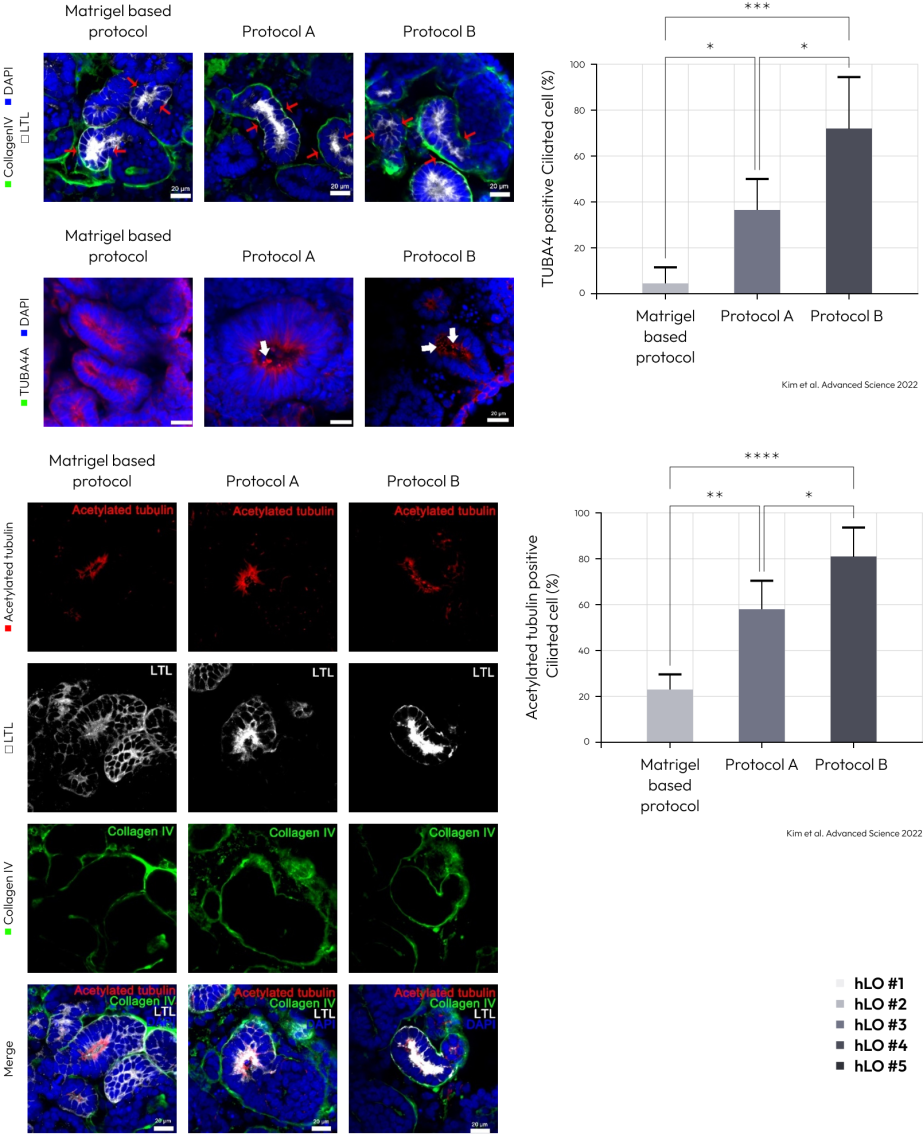
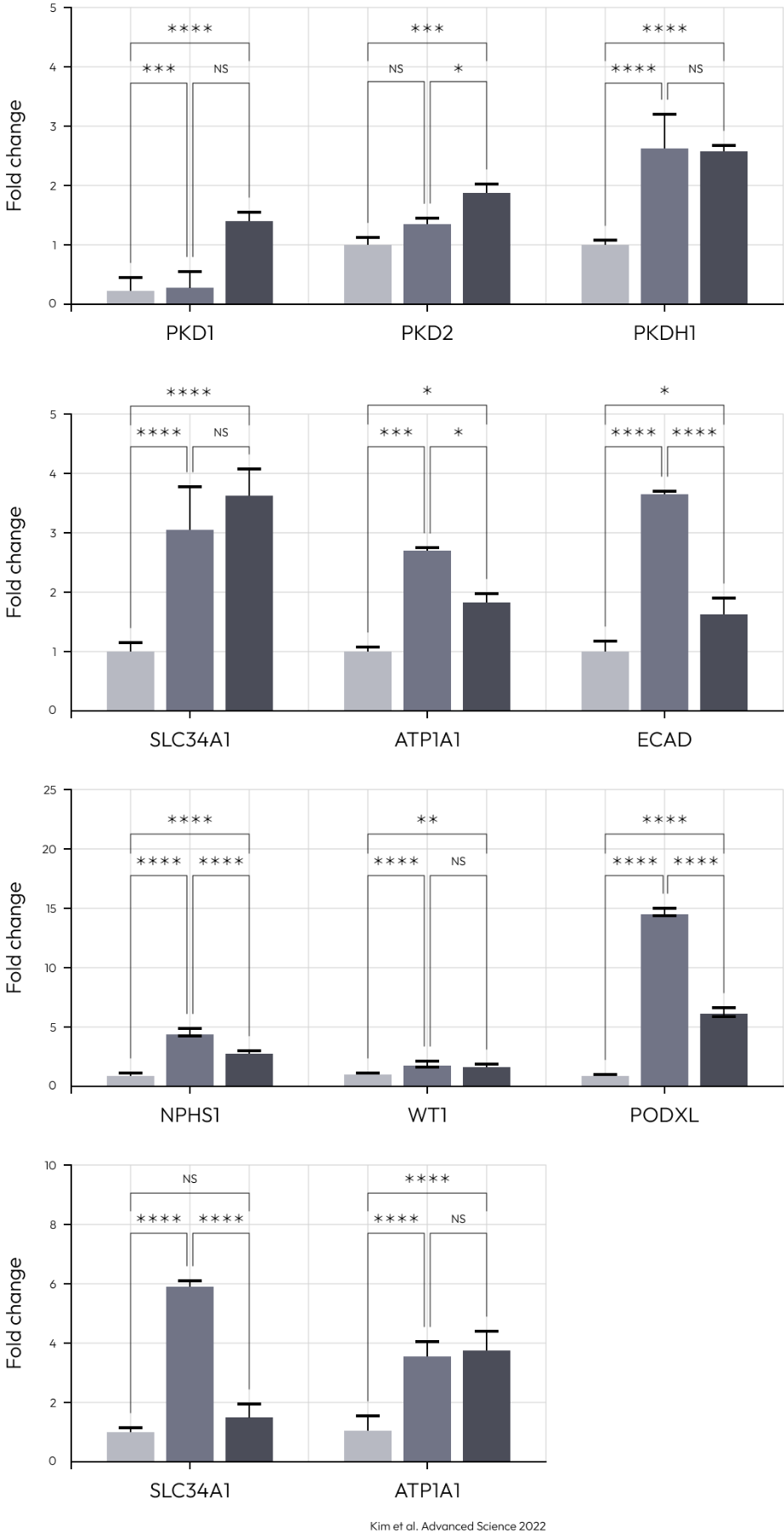
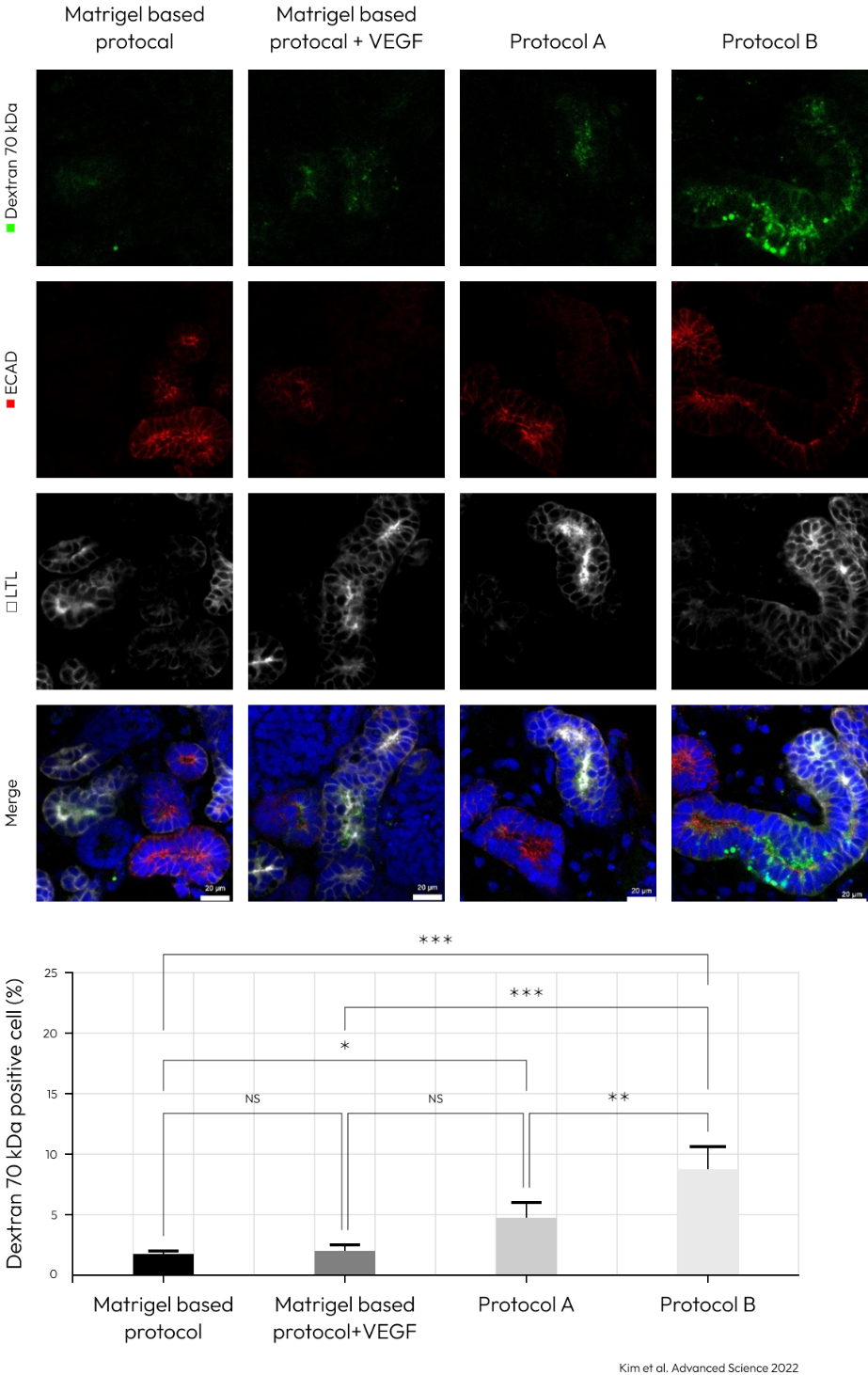
Enhanced polarization of the proximal tubules, with apical enrichment of the brush border marker lotus tetragonolobus lectin (LTL) and primary cilia, was observed in kidney organoids cultured by protocol A and B.
Decreased Off-target Cell
- Identifying 18 cell types in kidney organoids through scRNAseq, the research demonstrated improved nephron cell differentiation in the presence of kidney dECM, notably with protocols A and B. These protocols showed reductions in off-target cells, proliferating cells, and precursor cells.
- Pseudo-time ordering further revealed enhanced cell maturity in organoids cultured with protocols A and B.
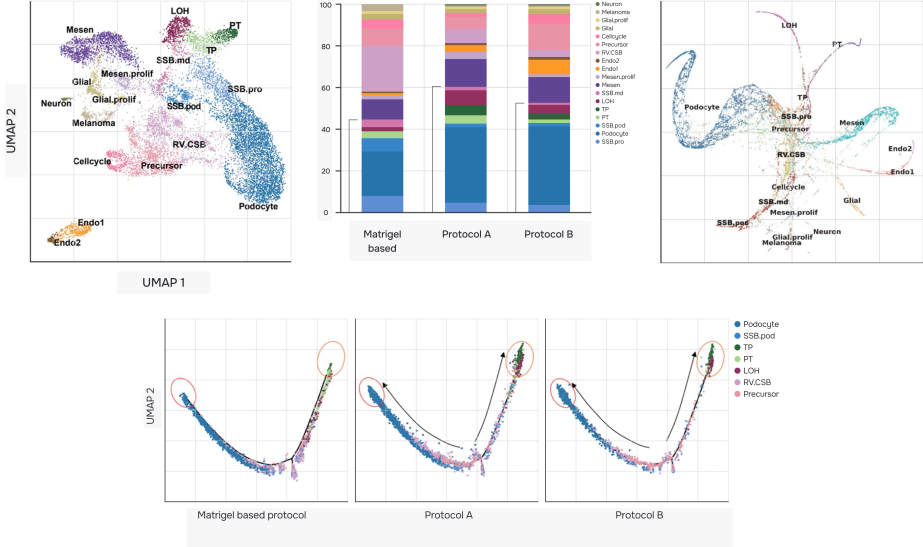
Unlock Superior Kidney Development with Advanced Podocyte Induction Protocols
- Examining upregulated genes in podocytes generated by protocols A and B, the functional enrichment analysis for Gene Ontology (GO) biological processes revealed their predominant involvement in kidney and nephron development. These findings suggest that kidney dECM influences genes associated with kidney development, enhancing maturation into nephron cells.
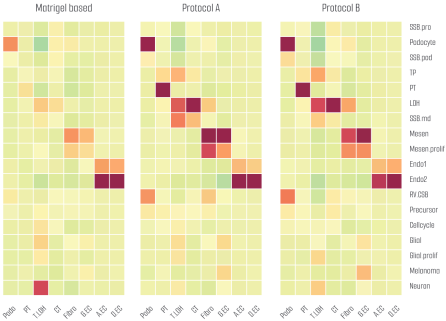
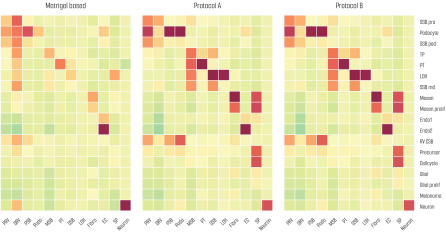
- Notably, podocytes induced by protocols A and B exhibited a high resemblance to human and fetal podocytes and proximal tubule (PSB), while those induced by the Matrigel-based protocol showed lower similarity. Furthermore, various cell types induced by protocols A and B demonstrated increased similarity to human and fetal kidney cell types.
Advance Drug Discovery with Smarter, Ethical Models.
Interested in bringing human-relevant lung models into your research?
Contact Lambda Biologics to discuss your project with our team.
Frequently Asked Questions
What are kidney organoids?
A kidney organoid is a three-dimensional, human stem cell-derived in vitro model that reproduces essential structural and cellular features of human kidney tissue. These organoids contain nephron-like units and renal cell populations arranged in a 3D architecture, enabling the study of kidney biology in a controlled laboratory setting.
Compared to conventional 2D cultures, kidney organoids provide enhanced biological context for investigating renal responses, tissue-level effects, and disease-associated phenotypes.
Compared to conventional 2D cultures, kidney organoids provide enhanced biological context for investigating renal responses, tissue-level effects, and disease-associated phenotypes.
What research applications are Lambda Biologics kidney organoids used for?
Our kidney organoids are used in translational and preclinical research to support nephrotoxicity assessment, disease-relevant studies, and compound evaluation in a human-derived in vitro system.
Are kidney organoids suitable for CRO-based research projects?
Lambda Biologics provides kidney organoids as part of a CRO-ready research platform, supporting study design, experimental execution, and data generation aligned with research objectives. The platform integrates kidney organoid culture with downstream assays to support compound evaluation and mechanistic research.
How do I get started with ordering or discussing a project?
Simply contact Lambda Biologics team. Our scientists will review your project needs and provide the right options whether it’s technical guidance, a quote, or custom organoid development.