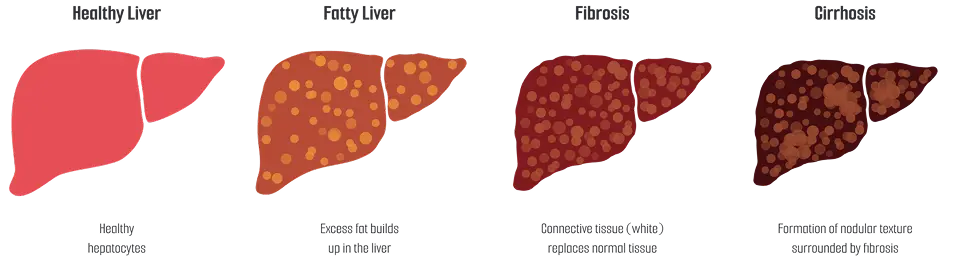
Metabolic dysfunction – associated fatty liver disease (MAFLD, formerly NAFLD) is one of the most prevalent chronic liver disorders worldwide and a major risk factor for progression to steatohepatitis, fibrosis, and cirrhosis. However, predictive human-relevant in vitro models remain limited. Conventional 2D hepatocyte cultures rapidly lose metabolic function, while animal models often fail to recapitulate human-specific lipid metabolism and drug responses.
Limited physiological relevance
of 2D hepatocyte cultures, which rapidly lose metabolic function and fail to sustain lipid metabolism over time.
Poor translational predictivity
of animal models, due to species-specific differences in lipid handling and drug response.
Inability to model disease progression
from early steatosis to more advanced lipid accumulation under chronic metabolic stress.
Lack of scalable human-based platforms
suitable for compound screening and mechanistic studies in metabolic liver disease.
Discuss Your Research
Our human liver organoid-based fatty liver models provide a human-relevant platform for studying metabolic liver disease and evaluating therapeutic candidates with improved translational confidence.
Lambda Biologics’ organoid-based ADC evaluation workflow supports multiple stages of preclinical ADC development, from target expression profiling and tumor efficacy assessment to MOA analysis, toxicity evaluation, bystander effect testing, and ADC-resistance model development. By integrating patient-relevant tumor and normal organoid models, this platform helps generate more predictive insights into ADC efficacy, safety, and therapeutic potential.
Human iPSC-derived liver organoids were generated through directed hepatic differentiation in a 3D extracellular matrix-supported culture system. The resulting organoids exhibit liver-specific architecture and maintain key hepatic functions relevant to lipid metabolism.
Step 2: Induction of Fatty Liver Phenotype
To model fatty liver disease, liver organoids were exposed to excess free fatty acids to mimic metabolic overload conditions observed in MAFLD.
To model fatty liver disease, liver organoids were exposed to excess free fatty acids to mimic metabolic overload conditions observed in MAFLD.
Step 3: Phenotypic Validation and Lipid Accumulation Analysis
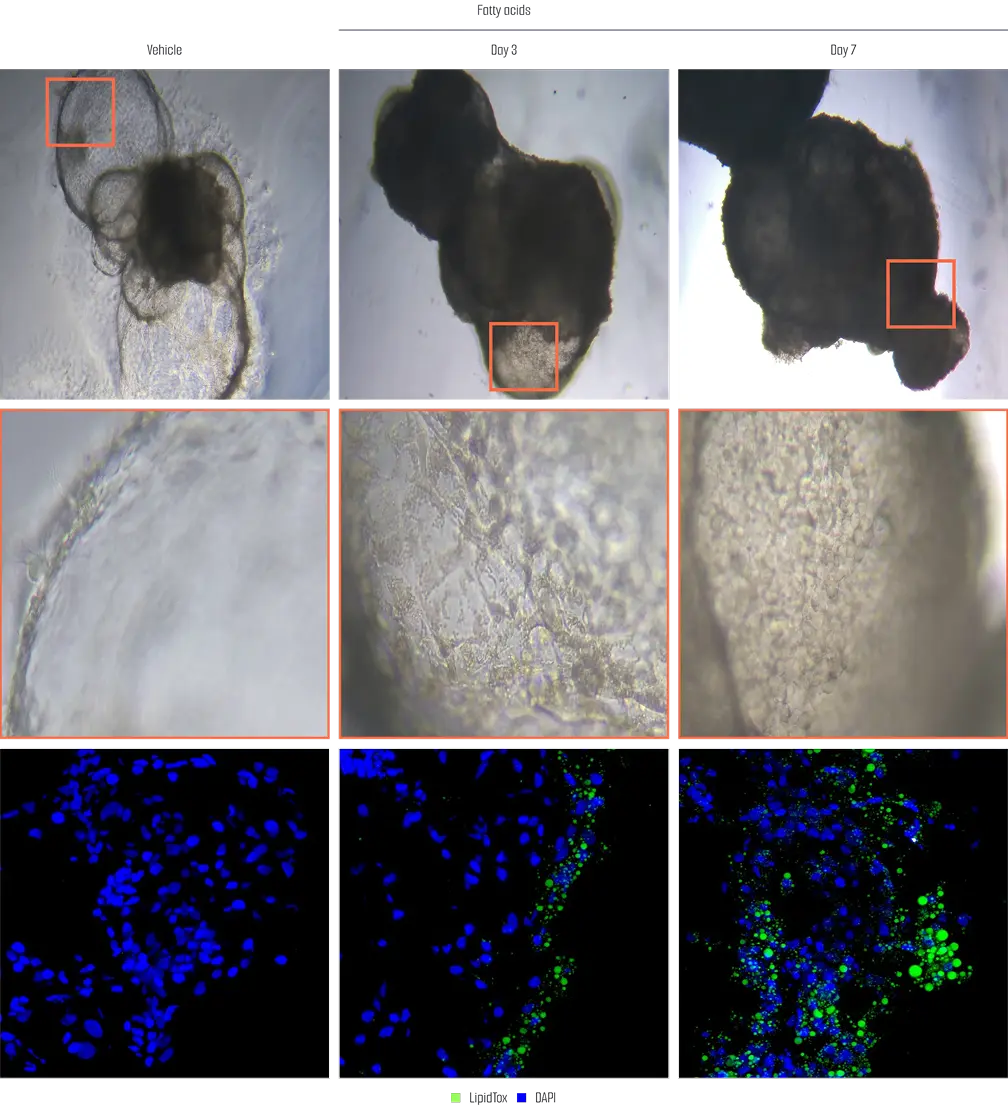
Fatty acid-treated liver organoids exhibited progressive intracellular lipid accumulation, assessed using LipidTox staining at Day 3 and Day 7.
Early-stage lipid accumulation was observed at Day 3, while significantly increased lipid burden was detected at Day 7, demonstrating time-dependent progression of steatosis.
These results confirm the suitability of this model for studying fatty liver disease mechanisms and evaluating therapeutic candidates.
Discuss Your Research
Our human liver organoid-based fatty liver models provide a human-relevant platform for studying metabolic liver disease and evaluating therapeutic candidates with improved translational confidence.
Lambda Biologics’ organoid-based ADC evaluation workflow supports multiple stages of preclinical ADC development, from target expression profiling and tumor efficacy assessment to MOA analysis, toxicity evaluation, bystander effect testing, and ADC-resistance model development. By integrating patient-relevant tumor and normal organoid models, this platform helps generate more predictive insights into ADC efficacy, safety, and therapeutic potential.
Successfully recapitulated progressive hepatic steatosis in a time-dependent manner
Provided a predictive human-relevant platform for metabolic disease modeling
Enabled assessment of compound efficacy and metabolic liabilities
Reduced reliance on animal models while improving translational confidence in early-stage drug development
Your CRO Partner for Human-Relevant Organoid Research & Drug Discovery
Human-relevant disease modeling services by Lambda Biologics