
New feature: Study stress-induced hair greying with our human skin and hair organoid model, designed to reveal how stress alters pigment production in a human-relevant system.
Read more
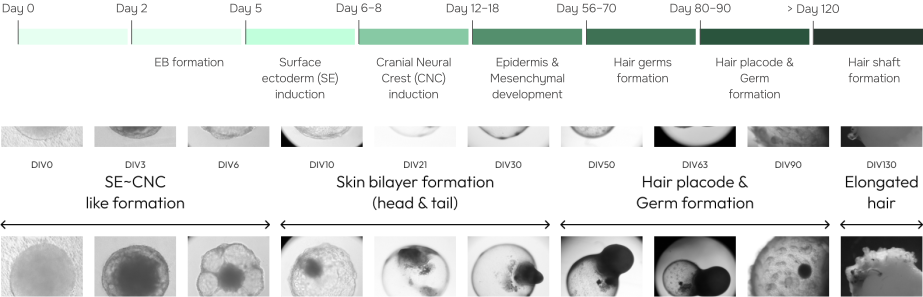
Generation process of mature human skin organoid
We have developed hPSC-derived human skin organoids based on our differentiated technology to develop hair-bearing mature skin organoids.
Cellular and structural similarity
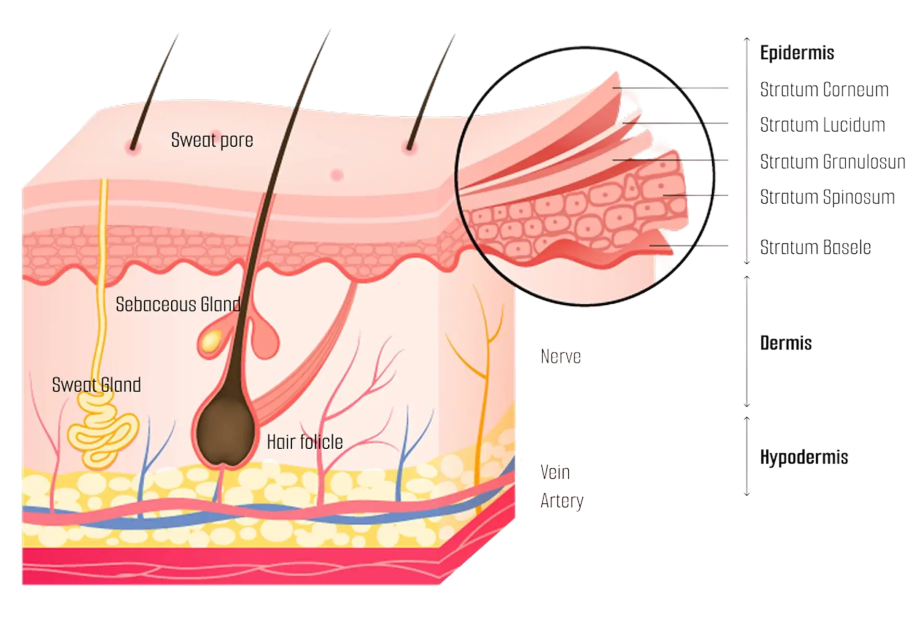
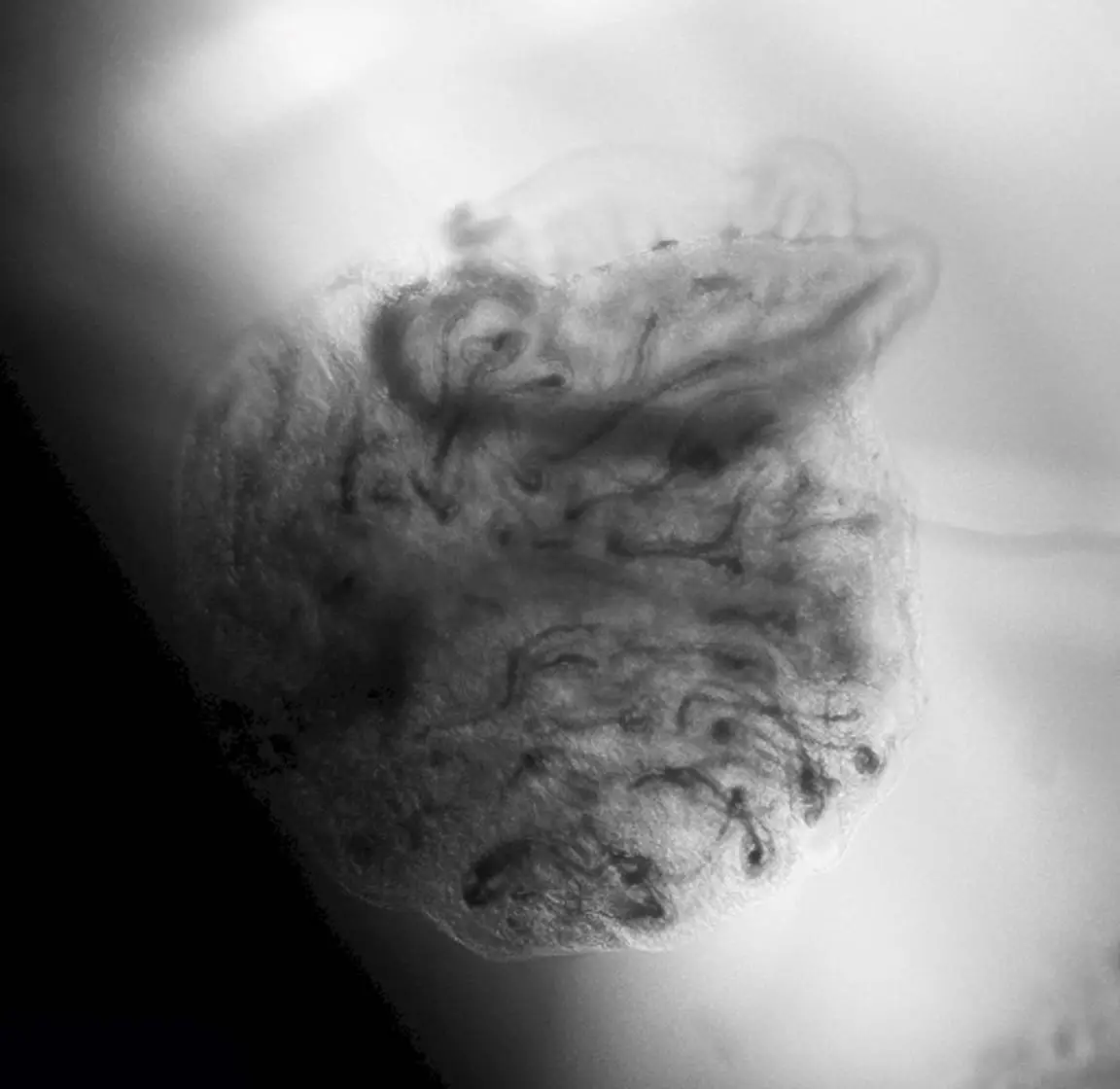
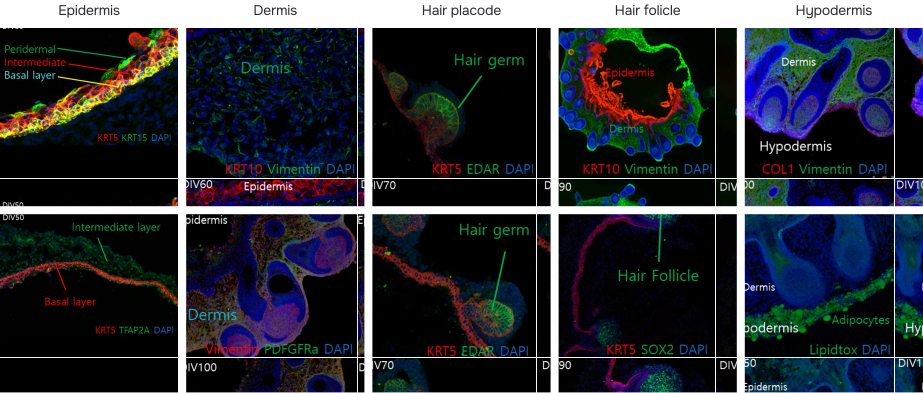
Our skin organoids can be observed in a mature form with the epidermal layer, dermal layer, and subcutaneous tissue that appear in actual skin structure.
It is also composed of various cells such as fibroblasts, melanocytes, hair follicle-related cells, and adipocytes.
It is also composed of various cells such as fibroblasts, melanocytes, hair follicle-related cells, and adipocytes.
Advanced skin organoid manufacturing technology
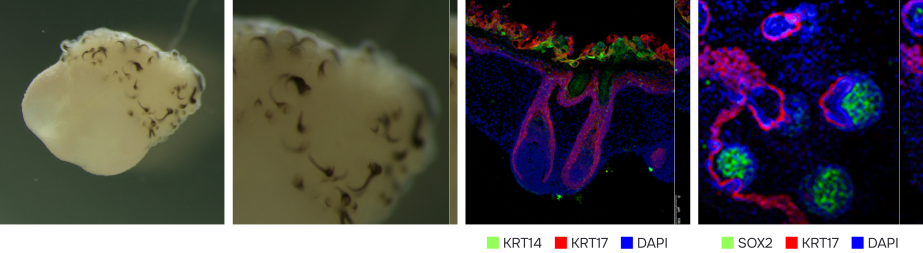
- Our skin organoids can be observed in a structurally mature form and are capable of uniformly forming a higher number of hair follicles.
- Compared to traditional artificial skin models and 2D cell lines, our skin organoids exhibit superior performance in replicating the complexity and functionality of human skin.
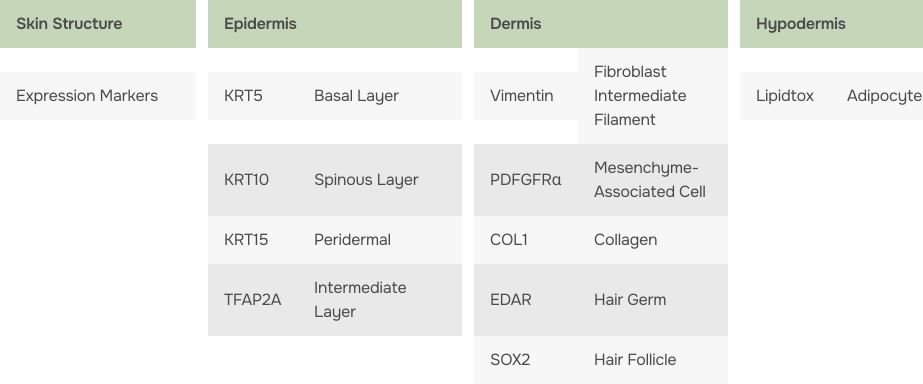
MarkersSkin structure
- KRT5 Basal Basal Layer [Epidermis]
- KRT17 Cornified envelope
- EDAR [Epidermis]
- SOX2
• Hair Gem [Dermis]
• Dermal papilla cell [Dermis]
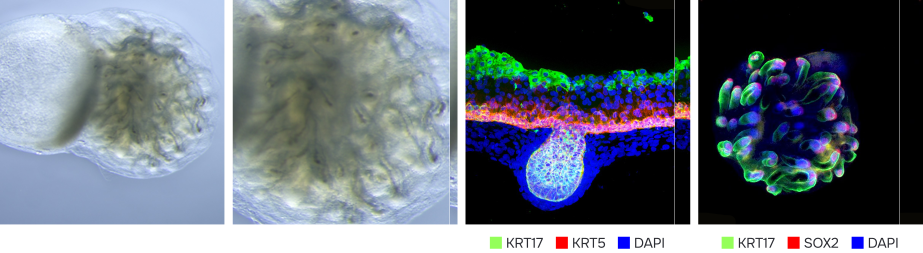
Advanced skin organoid manufacturing technology
Structural characteristics of skin organoids
- In order to discover drugs that help in the formation of hair, active substances were treated at the time when hair bulbs in skin organoids were formed, and drugs that increased hair follicle formation compared to the control group were selected.
- When treated with an effective drug, an increase in the number of hair follicles was obtained, and additional research on mechanisms related to hair follicle formation was conducted.
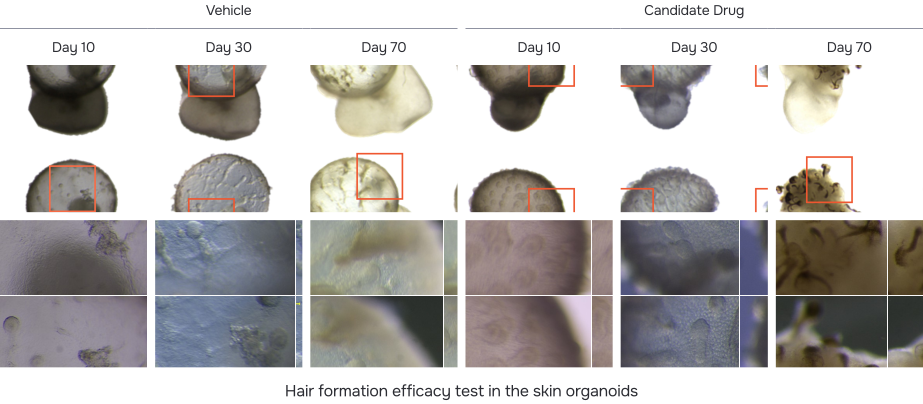
Hair loss model production and effectiveness evaluation
To create a hair loss model, we treated skin organoids with hair with the male hormone DHT to create a hair loss model. It was confirmed that hair loss was suppressed by co-administration with Minoxidil, a known hair loss treatment, and was used to discover effective candidates.
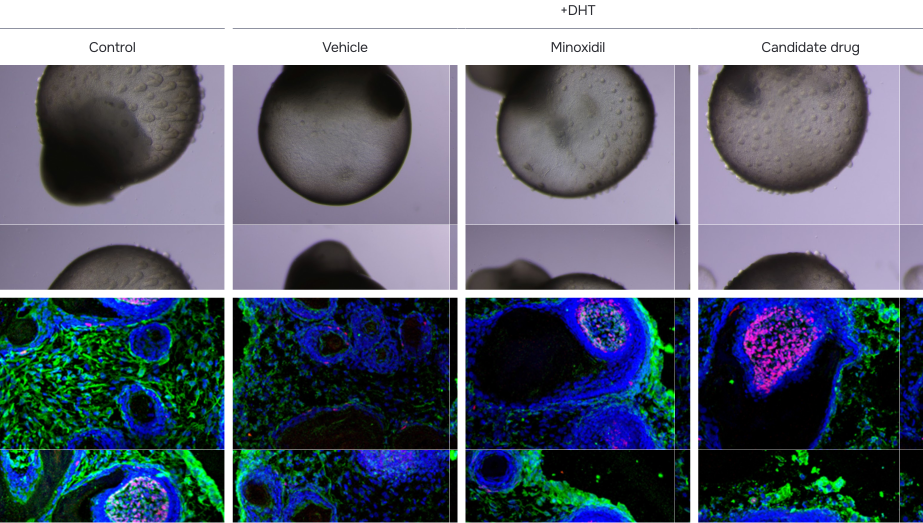
New Feature: Stress-Induced Hair Greying Model Using Human Skin Organoids
- The skin is a complex organ that protects the body from external stimuli such as heat and chemical irritants. While most skin studies rely on mouse models, species differences limit their relevance to human biology. Artificial skin models have emerged as alternatives but often lack key structures like hair follicles and sebaceous glands.
- To overcome these limitations, we developed human skin organoids containing hair follicles, based on established hPSC-derived organoid protocols. Using this platform, we created a stress-induced hair greying model in collaboration with COSMAXBTI Co., Ltd and OrganoidSciences.
- Building on evidence that stress hormones trigger depigmentation, the model applies norepinephrine, cortisol, and butoxamine treatments to simulate stress responses in vitro. This enables the study of melanocyte activity, pigment production, and the mechanisms behind stress-related hair greying in a human-relevant microenvironment.
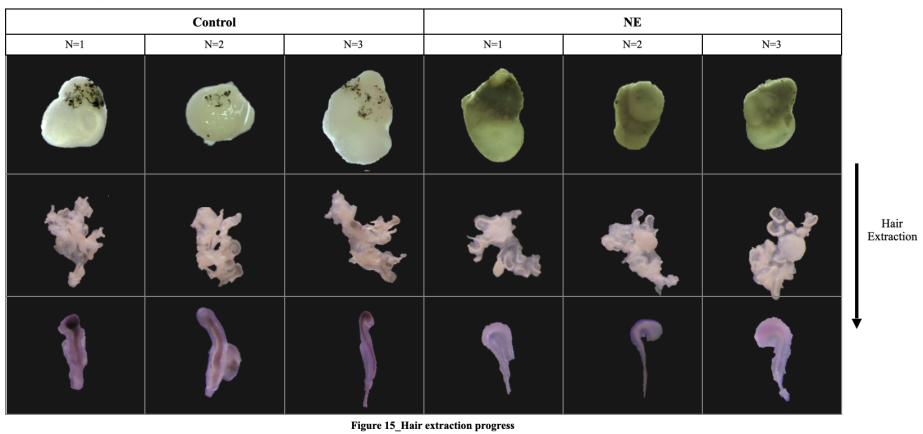
Advance Drug Discovery with Smarter, Ethical Models.
Interested in bringing human-relevant lung models into your research?
Contact Lambda Biologics to discuss your project with our team.
Frequently Asked Questions
What are Skin & Hair Organoids?
Skin & Hair Organoids are 3D models derived from human stem cells that replicate hair follicles, epidermal, dermal, and subcutaneous layers, allowing studies of hair growth, regeneration, and skin biology.
How can Skin & Hair Organoids help in hair disorder research?
They provide a reliable model to study conditions like alopecia, enabling scientists to understand disease mechanisms and test potential therapeutic compounds effectively.
What validation data is available for your organoid models?
We provide detailed technical data sheets covering differentiation methods, marker expression, and functional validation, so you can trust the reliability and reproducibility of your results.
Can Skin & Hair Organoids be used to test hair growth treatments?
Yes, they allow evaluation of drug efficacy and safety during hair follicle formation, supporting the development of new hair growth therapies.
How do I get started with ordering or discussing a project?
Simply contact Lambda Biologics team. Our scientists will review your project needs and provide the right options whether it’s technical guidance, a quote, or custom organoid development.