Generation Process
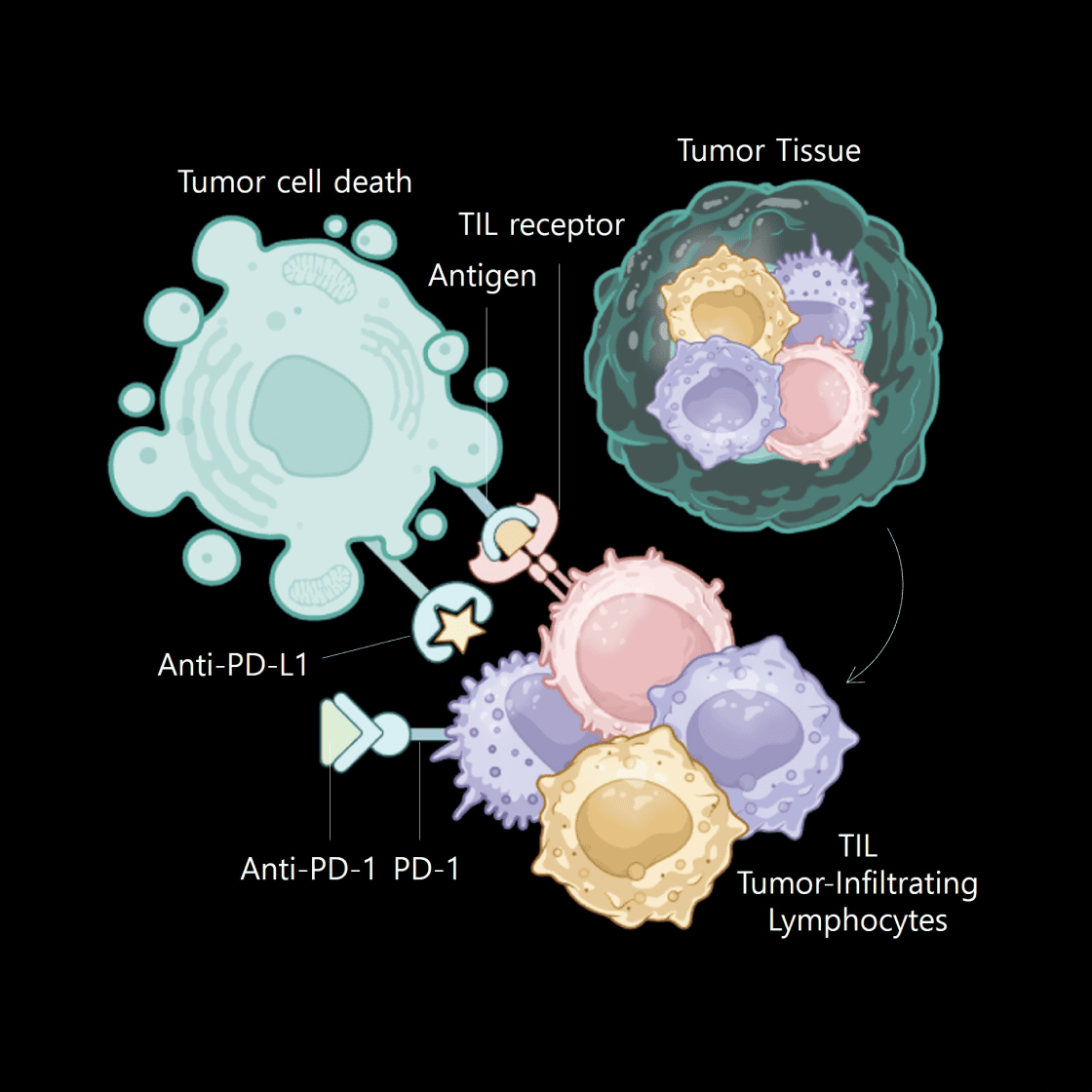
Tumor-infiltrating lymphocytes (TILs) are immune cells in cancer tissues with the potential to either eliminate or aid in cancer growth.
Immunotherapeutics can reactivate exhausted TILs, allowing them to attack cancer cells.
Direct extraction and cultivation of TILs provide an evaluation solution for immunotherapeutics, and the extraction yield can predict their responsiveness, considering potential absence due to extraction yield or unique cancer characteristics.
Process
- Tumor-infiltrating lymphocytes (TIL) refer to lymphocytes that infiltrate tumors either intrinsically or extrinsically to eliminate tumors or help tumor growth.
- Some TIL have antitumor reactivity that can eliminate tumor cells, but they often exist in an inhibited state.
- Our company has developed conditions to extract and culture TIL from patients’ tumors.
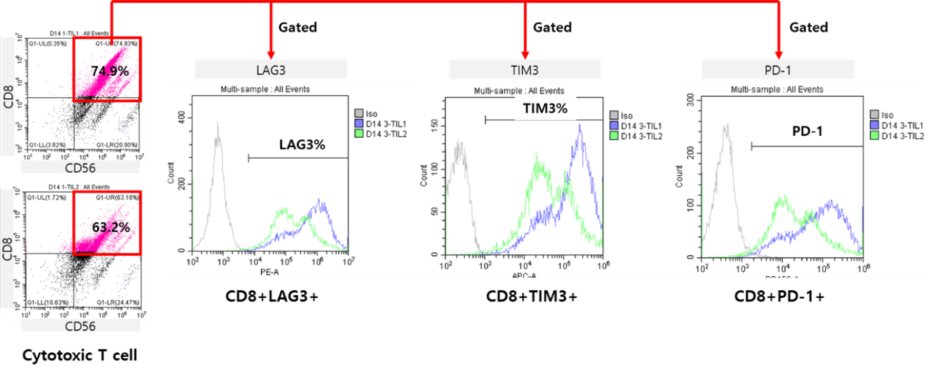
- During TIL culture, the number of cytotoxic T cells increased, and the expression levels of various immune checkpoint molecules allowed us to check the status of TIL.
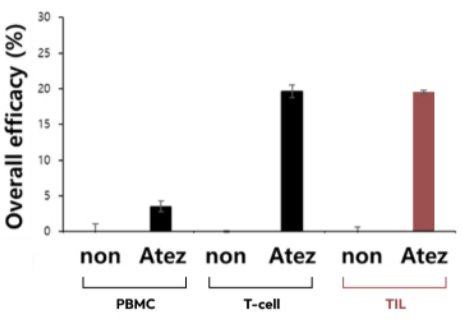
When evaluating the efficacy of atezolizumab in co-culture conditions with tumor organoids and tumor-infiltrating lymphocytes or tumor organoids and T cells derived from PBMCs, higher tumor organoid killing was observed in conditions without co-culture with tumor-infiltrating lymphocytes or T cells.
The method of evaluating efficacy by treating a specific mixture of tumor organoids and tumor-infiltrating lymphocytes with anticancer drugs is still at the research level globally, and our company uniquely holds patents and commercialization services related to this.
Make your research shine brighter through the only service of its kind in the world.Frequently Asked Questions
What types of cancer can be studied using your TIL + Organoid service?
Our service currently supports seven cancer types derived from patient tissue: colorectal cancer, non-small cell lung cancer (NSCLC), pancreatic cancer, breast cancer, cholangiocarcinoma (bile duct), gastric cancer, and ovarian cancer. If your cancer type is not listed, please contact us – we evaluate new indications on a case-by-case basis.
How is your TIL co-culture system different from standard immunotherapy assays?
Most conventional assays use peripheral blood-derived T cells (PBMCs) rather than tumor-resident lymphocytes. Our approach isolates TILs directly from the patient’s own tumor tissue and co-cultures them with patient-matched cancer organoids. This recreates the actual tumor microenvironment (TME) far more accurately, yielding drug efficacy data that better predicts real patient response – including to checkpoint inhibitors like atezolizumab.
What does the extraction yield of TILs tell us, and what happens if the yield is low?
TIL extraction yield is itself a biological readout. A low yield may reflect the immunosuppressive nature of a particular tumor – meaning that tumor may be less responsive to immunotherapy in a clinical setting. We report yield data as part of our results, so even in cases where co-culture is not feasible, the extraction outcome provides meaningful predictive information about the patient’s likely immunotherapy response.