Single-Cell RNA Sequencing Services
Singe cell RNA sequence utilizes technology to examine cell characteristics by measuring gene expression, regulatory factors, and surface proteins. Existing analysis techniques, such as bulk RNA sequencing, only provide average information across all cells, making it crucial to differentiate and analyze various cell types.
Recognizing these challenges, single cell analysis technology was developed to overcome these limitations. It allows for the precise examination of gene expression information at the individual cell level, providing accurate insights into cell types, regulators, and more.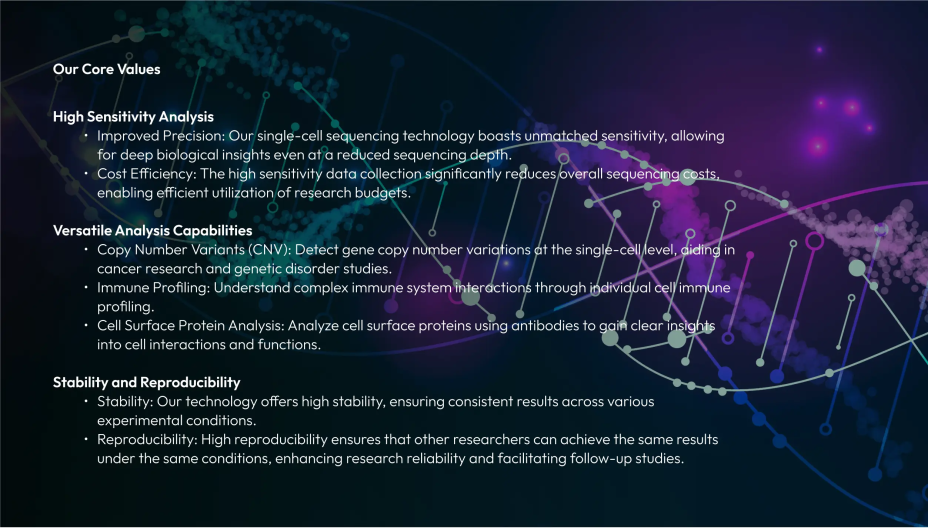
Process
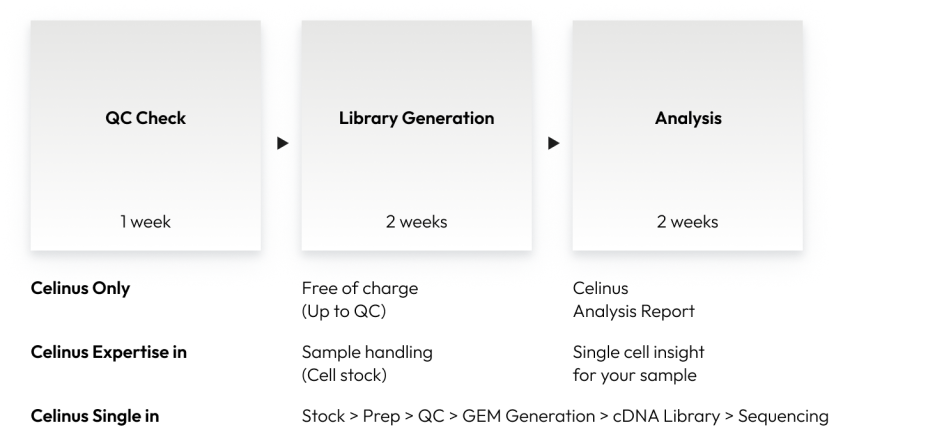
Sample preparation
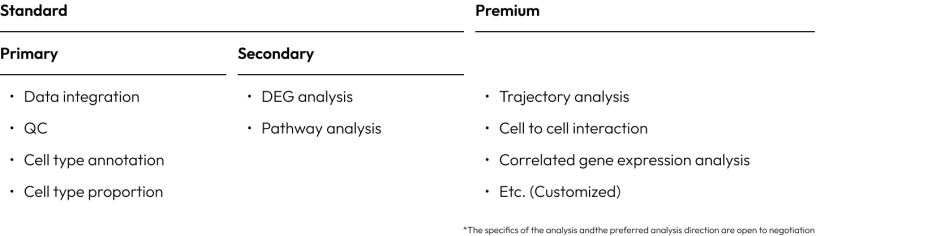
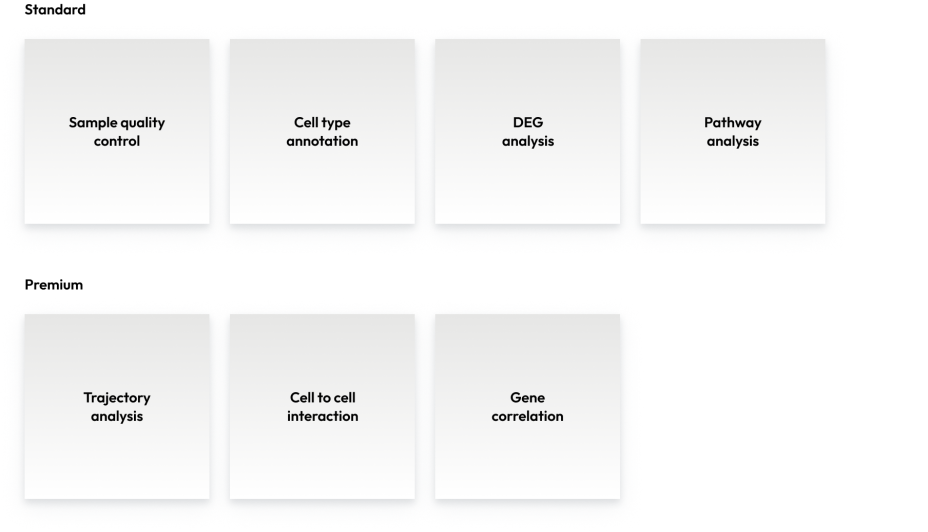
- This service offers tailored analysis and data to customers following initial analysis.
- Diverse analysis methods are employed to align with the researcher’s thesis direction,research design, etc.
- New insights can be obtained through data analysis utilizing various Bioinformatics Analysis Tools.
Applications
Our scRNA-seq service is widely used in:
- Organoid and stem cell research
- Drug discovery and toxicity screening
- Cancer and tumor microenvironment studies
- Immunology and inflammation research
- Disease modeling and biomarker discovery
Ready to begin?
Tell us about your project and let’s build the right vector for your research – starting with a solid cloning foundation.
Frequently Asked Questions
What is scRNA-seq and how is it different from bulk RNA-seq?
scRNA-seq (single-cell RNA sequencing) analyzes gene expression at the resolution of individual cells, enabling the identification of distinct cell types, rare populations, and cell states. In contrast, bulk RNA-seq measures averaged gene expression across a mixed cell population, masking cellular heterogeneity.
What types of samples are compatible with Lambda Biologics' scRNA-seq service?
Our scRNA-seq service supports a wide range of samples, including human organoids, stem cell–derived models, primary tissues, tumor samples, and immune cell populations. Sample suitability is assessed during project consultation.
Can scRNA-seq be used to validate organoid models?
Yes. scRNA-seq is widely used to evaluate cellular composition, maturation, and reproducibility of organoids by comparing them with human in vivo reference datasets. It is considered a gold-standard method for organoid validation.
Will I receive publication-ready data?
Yes. Deliverables include processed data matrices, high-quality visualizations, and a comprehensive analysis report suitable for publications, grant submissions, and internal R&D decision-making.
Do you provide scientific consultation before starting the project?
Absolutely. Each project begins with scientific consultation to define experimental design, sequencing depth, and analysis scope aligned with your research objectives.