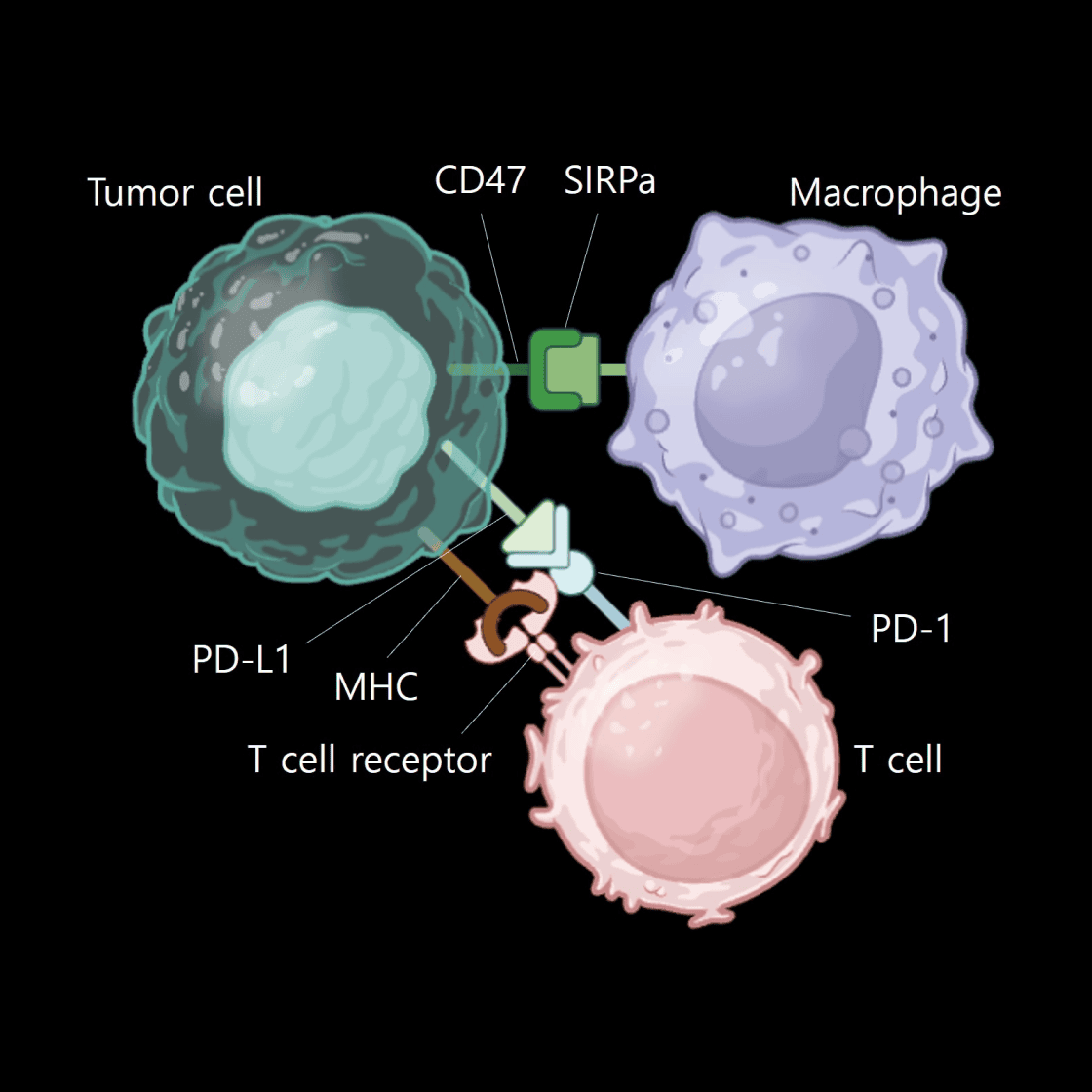
Characteristics
The co-culture drug evaluation solution with macrophages, T cells, and cancer organoids allows for the simultaneous observation of the phagocytic activity of macrophages and the cytotoxic ability of T cells.
Process
- By utilizing patient-derived tumor organoids and T cells, macrophages, this is a new evaluation solution with mechanisms involving two or more immune cells.
- Generally, M1 macrophages are known to be associated with tumor growth suppression and M2 macrophages are known to be associated with tumor growth promotion.
- To perform different functions, they have different immune markers, metabolic characteristics and gene profiles. In vivo, proper balance of differentiation into M1 and M2 macrophages is required to elicit an immune response against tumors. For the development of a new drug evaluation solution, we conducted efficacy evaluations of drugs and antibodies on co-cultures of M1 macrophages, M2 macrophages and tumor organoids.
- After conducting the efficacy evaluation, growth rates and mortality were measured to establish optimal co-culture conditions
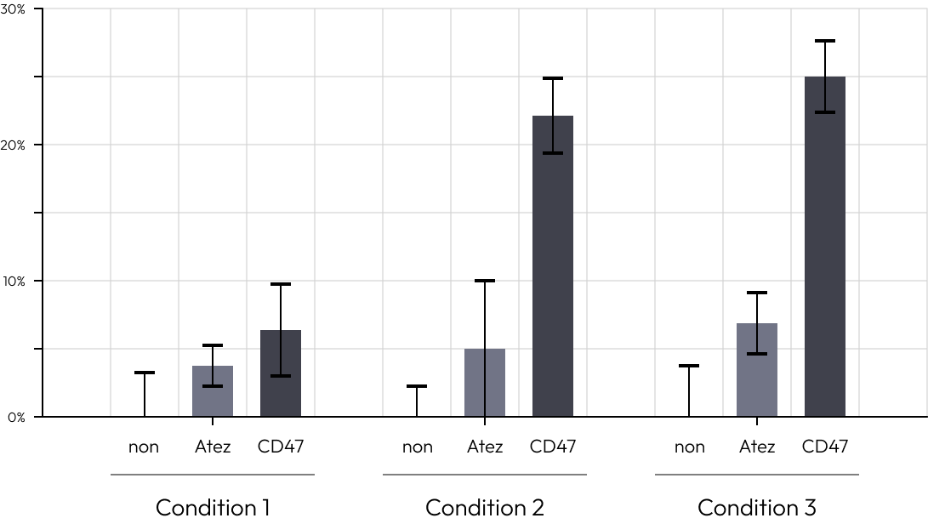
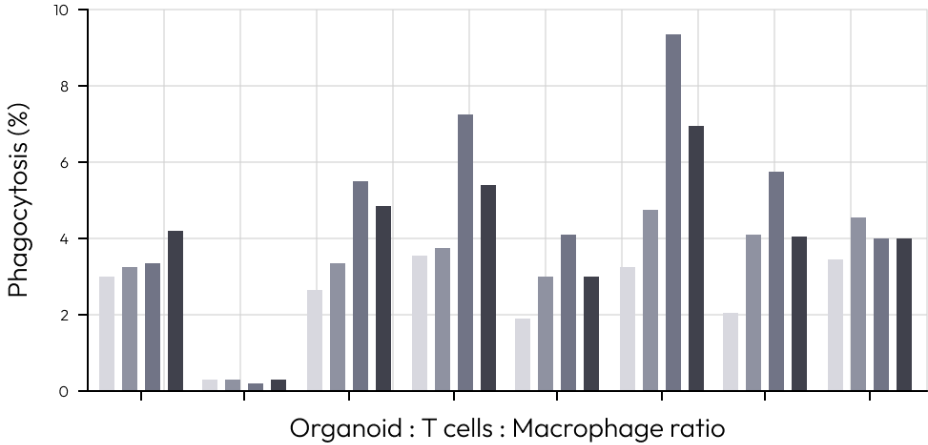
- To enable efficient testing, we have developed an evaluation solution utilizing macrophages derived from pluripotent stem cells.
- Ultimately, we have created an optimal co-culture model with macrophages derived from pluripotent stem cells, T cells and tumor organoids. By testing various drug conditions on this model, we confirmed high drug response rates. We have selected these rates as evaluation criteria for immuno-oncology drugs.
Frequently Asked Questions
What are Macrophages and their role in cancer research?
Macrophages are innate immune cells responsible for phagocytosis, antigen presentation, and cytokine secretion. In tumors, they can polarize into distinct phenotypes – pro-inflammatory (M1) or immunosuppressive (M2) – and significantly influence tumor growth, angiogenesis, and immune evasion.
How are Macrophage models used in preclinical studies?
Macrophage models are essential for studying tumor–immune interactions and evaluating immunotherapy efficacy. When co-cultured with tumor organoids or immune cells, they help replicate the complexity of the tumor microenvironment and predict therapeutic responses in vitro.
What distinguishes Lambda Biologics’ Macrophage models?
Lambda Biologics’ macrophage models are derived from human immune cells and characterized for M1/M2 polarization states. They can be integrated into patient-derived organoid and TME platforms, providing a reproducible, human-relevant system for oncology and immunology research.