Skin cell lines
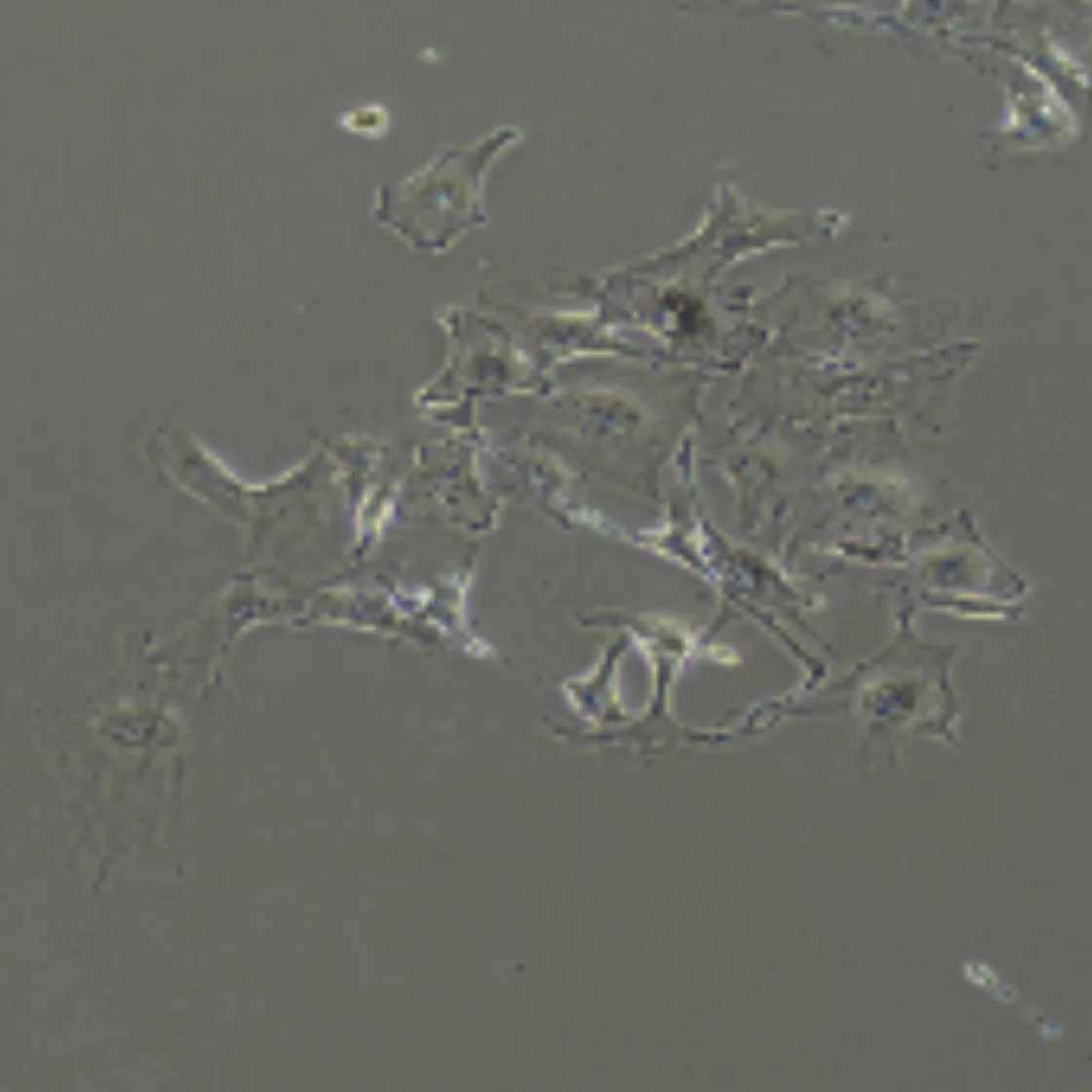
Melan-A
Targeted Melanin Studies
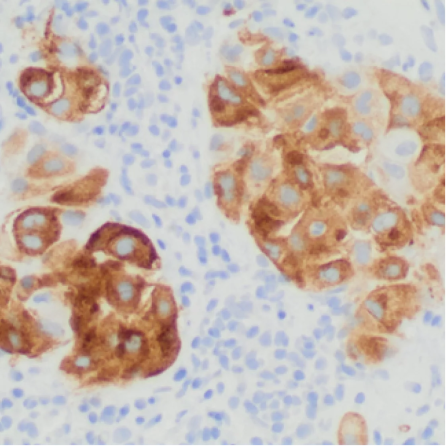
Utilize the Melan-A cell line to delve into melanin synthesis and regulation, critical for uncovering new pathways to reduce hyperpigmentation and enhance skin brightening.
Product Development and Testing
Use Melan-A cells to rigorously test the efficacy of skin brightening agents, ensuring they target and modulate melanin production effectively.
Safety and Compatibility Testing
Employ Melan-A cells to assess the safety and skin compatibility of new cosmetic products, making sure they are gentle yet effective for everyday use.
B16F10
Pigmentation Insight
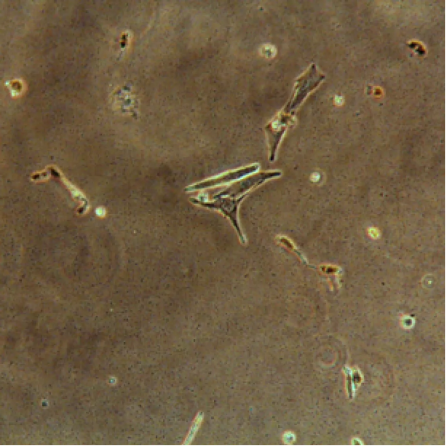
Utilize the B16F1 cell line to gain valuable insights into melanin production mechanisms, essential for developing effective skin brightening treatments.
Efficacy Testing
Leverage B16F1 cells to test and validate the effectiveness of brightening agents, ensuring they effectively reduce pigmentation and enhance skin luminosity.
Safety and Toxicity Assessments
Employ B16F1 cells to conduct thorough safety and toxicity evaluations of new skin care products, guaranteeing they are safe for consumer use while achieving desired brightening effects.
MNT-1
In-depth Melanoma Analysis
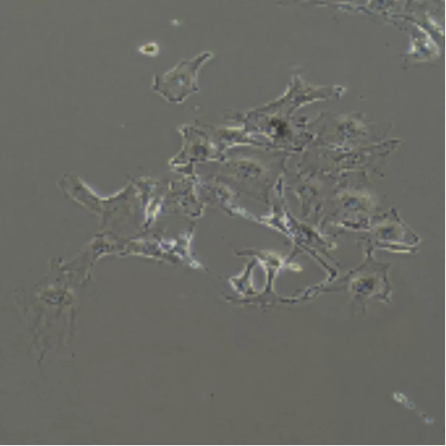
Utilize the Melan-A cell line to delve into melanin synthesis and regulation, critical for uncovering new pathways to reduce hyperpigmentation and enhance skin brightening.
Targeted Drug Testing
Leverage MNT-1 cells for precise evaluations of new treatments’ efficacy and safety.
Molecular Discovery
Explore genetic insights and potential targets with the MNT-1 melanoma cell line.
Melanocyte

Enhanced Pigmentation Studies
Utilize our melanocyte services to explore pigmentation processes and disorders in-depth, providing crucial insights into skin health and cosmetic development.
Tailored Cosmetic Testing
Assess the efficacy of skincare products on real human melanocytes, ensuring safety and effectiveness tailored to diverse skin types.
Advanced Disease Modeling
Leverage our melanocytes to model skin conditions such as vitiligo and hyperpigmentation, accelerating the discovery of targeted treatments.
Skin brightening
Engineered using state-of-the-art 3D bioprinting technology and dECM (decellularized extracellular matrix) bio-ink, this artificial skin model precisely replicates the biomechanical properties and elasticity of human skin. By enabling quantitative assessment of skin elasticity dynamics, this innovation establishes a new scientific standard for the evaluation of cosmetic formulations and dermatological therapeutics.
MNT-1
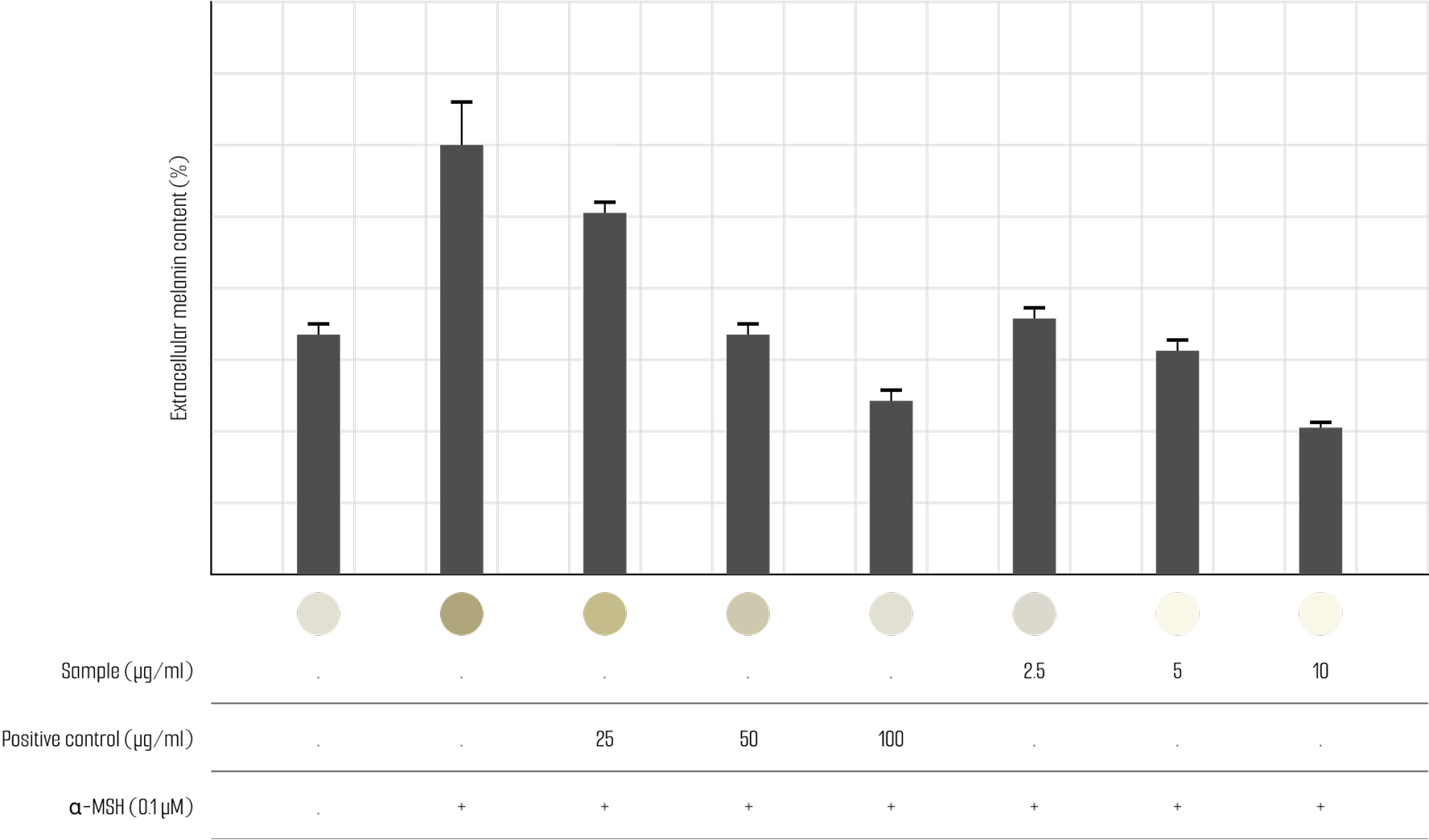
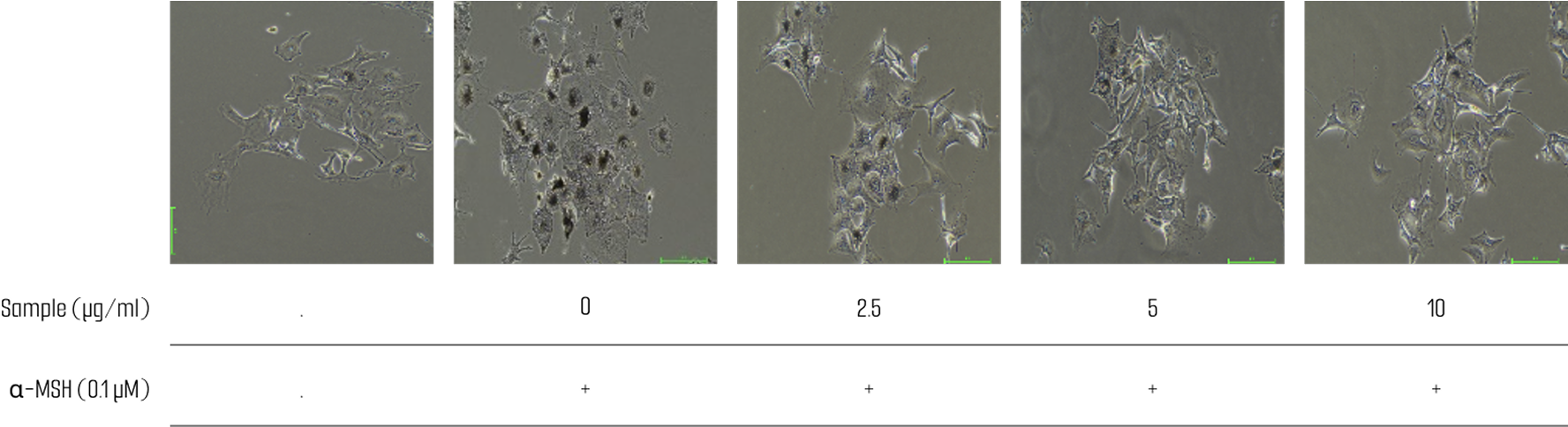
- Microscopy data (cell morphology)
- Extracellular melanin content (%) data
- Intracellualr melanin content (%) data
Assay Process
Step 01
Step 01-01
Cell thawing & Culture
1-2 weeks
Step 01-02
Test for concentration setting
1 week
- After culturing the cell line, it undergoes a stabilization process.
- Identify the concentration range for sample toxicity and establish the test concentration.
Step 02
Step 02-01
Melanocyte 48 well plate seeding
1-2 days
Step 02-02
Sample treatment
3-5 days
Step 02-03
Extracellular & intracellular melanin Measurement
1 day
- Stabilize the cells by culturing them in a 48-well plate for approximately 1 day.
- After verifying the condition of the stabilized cells, treat them with the melanin production-stimulating hormone (a-MSH), either alone or simultaneously with the sample.
- Assess the whitening efficacy by comparing the amount of melanin production in the group treated with a-MSH alone and the group treated simultaneously with the sample
Step 03
Step 03-01
Repeat
–
Step 03-02
Result
–
- Confirmation through repeated experiments, spanning from the initial cell seeding to the formation of melanin.
- Arranging raw data and generating quantitative or morphology data.
Stimulation
Engineered using state-of-the-art 3D bioprinting technology and dECM (decellularized extracellular matrix) bio-ink, this artificial skin model precisely replicates the biomechanical properties and elasticity of human skin. By enabling quantitative assessment of skin elasticity dynamics, this innovation establishes a new scientific standard for the evaluation of cosmetic formulations and dermatological therapeutics.
Cell Line
- Murine melanoma cell line : B16F10 , Melan-A
- Human melanoma cell lin : MNT-1
- Primary human melanocytes
Advance Your Pigmentation Research with Human Melanocytes
Gain human-relevant insights into skin pigmentation, skincare efficacy, and pigmentation disorders using our Melanocytes-based research services.
Frequently Asked Questions
What are melanocytes?
Melanocytes are specialized skin cells responsible for producing melanin, the pigment that determines skin color and provides protection against UV radiation. They play a central role in skin pigmentation and pigmentation-related disorders.
What types of melanocytes are used in this service?
We offer assays using primary human melanocytes as well as well-established melanocyte and melanoma cell lines, selected based on your research objectives and regulatory requirements.
What can be evaluated using melanocyte-based assays?
Our melanocyte-based assays enable quantitative evaluation of melanin production, pigmentation modulation, cytotoxicity, and treatment response for cosmetic and dermatological research.
Is this service suitable for regulatory and non-animal testing approaches?
Yes. Our melanocyte assays support non-animal testing strategies and are designed to align with OECD guidelines, helping generate human-relevant data for regulatory and safety assessments.
Can melanocyte models be used to study pigmentation disorders?
Absolutely. Our melanocyte models are suitable for studying pigmentation disorders such as hyperpigmentation and vitiligo, supporting mechanism-driven research and targeted treatment development.