Unlock the Potential of Salivary Gland Organoids for Ethical Research Applications
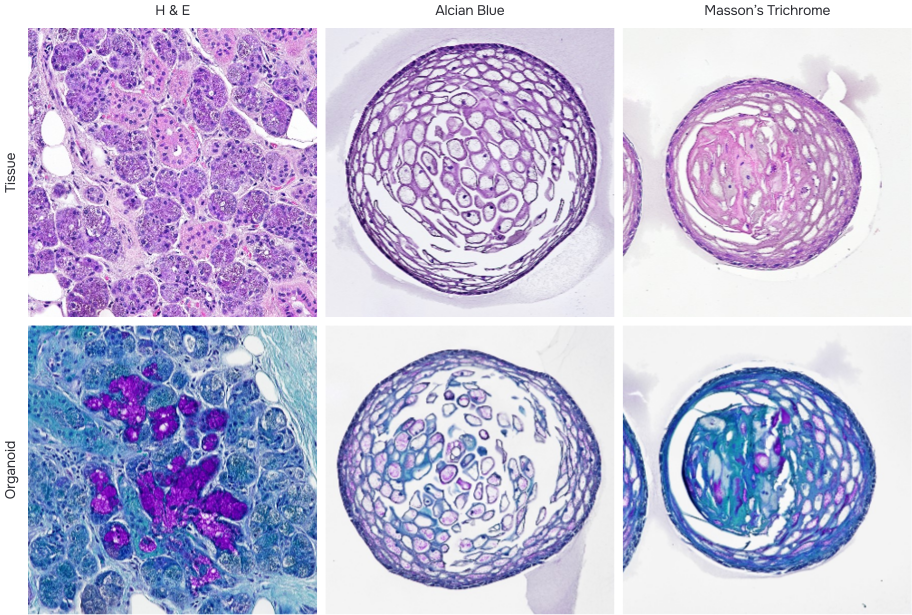
Histological analyses (H&E, PAS) demonstrate enhanced cellular complexity and a rise in mucin-producing cells as the organoids undergo differentiation. These findings confirm that tissue-level similarity strengthens during the differentiation process, reinforcing their value as human-relevant models for drug discovery and regenerative research.
Histology data
Differential Expression of Acinar and Ductal Markers in Organoids
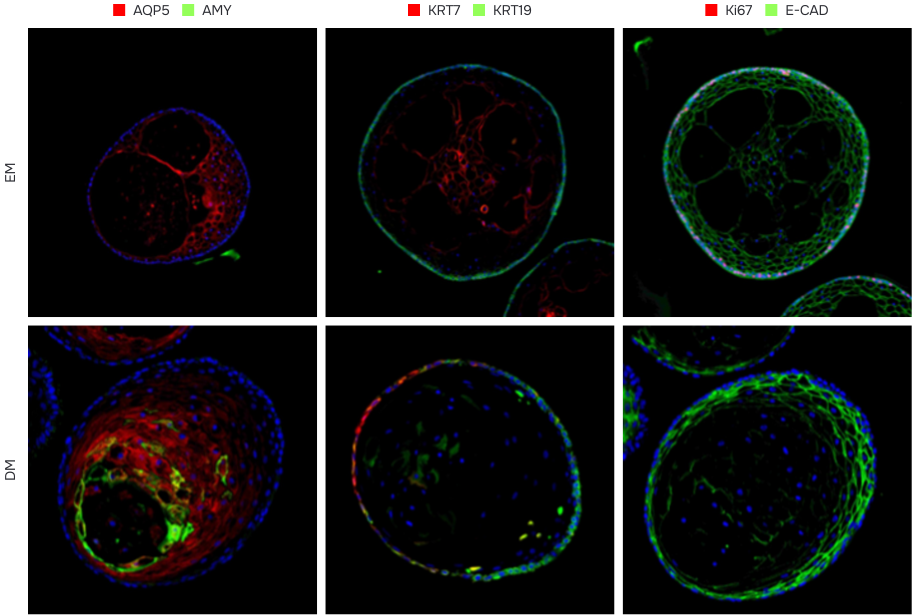
Immunofluorescence analysis reveals that differentiated organoids show elevated expression of acinar cell markers (AQP5, AMY) and a polarized distribution of ductal markers (CK7, CK19), closely mirroring the structural and functional organization of native salivary gland ducts.
IF data
Carbachol Test
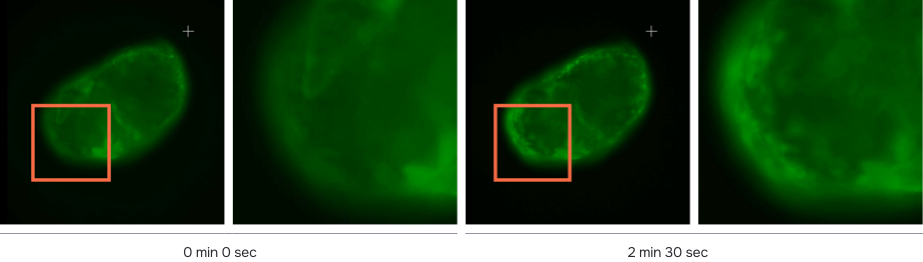
The ability to secrete saliva was verified by observing the response of calcium accumulation upon stimulation with the cholinergic agonist carbachol.
Advance Drug Discovery with Smarter, Ethical Models.
Interested in bringing human-relevant lung models into your research?
Contact Lambda Biologics to discuss your project with our team.
Frequently Asked Questions
What are salivary gland organoids?
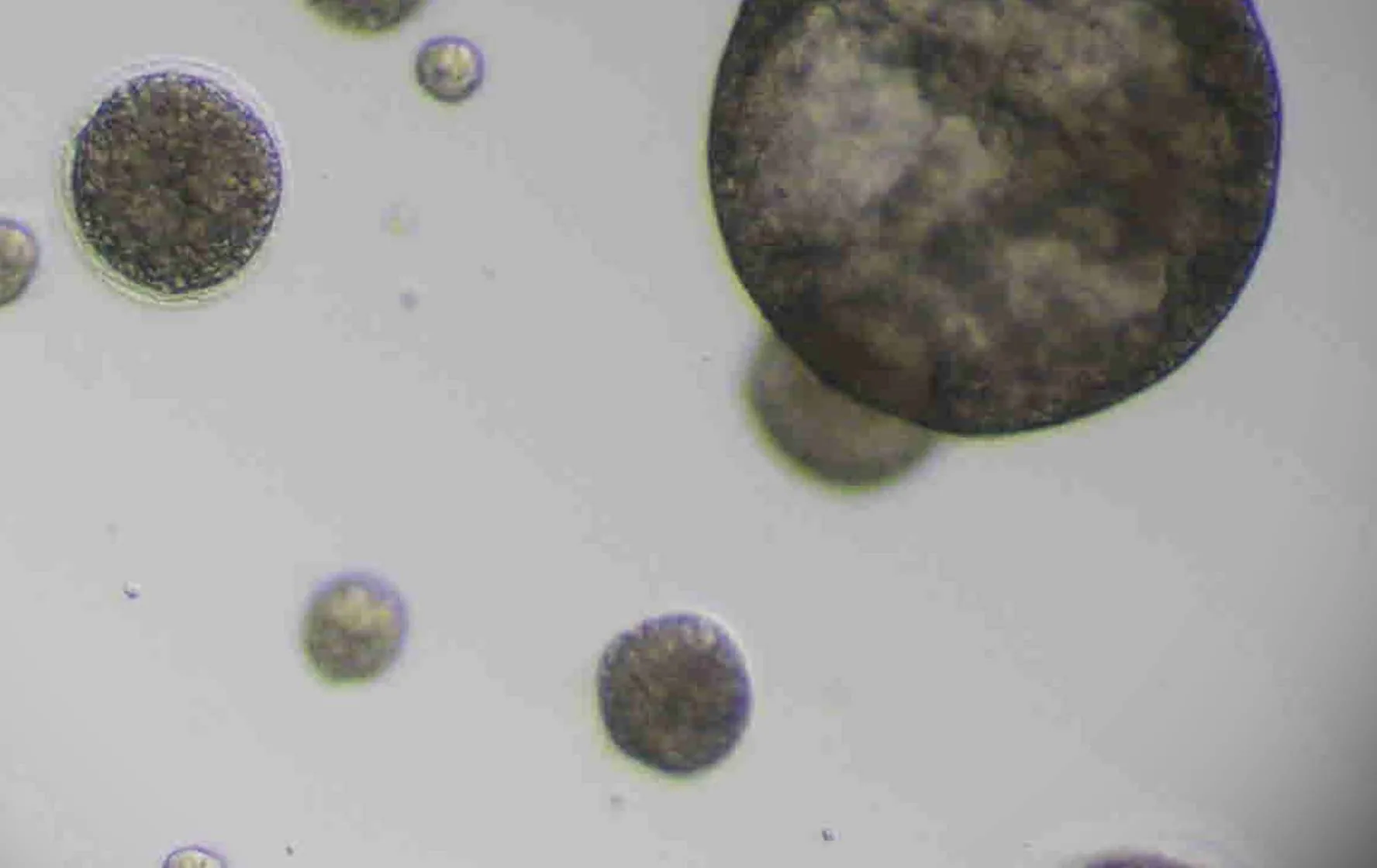
Salivary gland organoids are 3D cellular models derived from primary or stem cells that recapitulate the structure and function of human salivary glands. They provide a physiologically relevant system for studying glandular biology, disease mechanisms, and regenerative potential.
How closely do Lambda Biologics’ Salivary Gland Organoids replicate the structure and function of native salivary tissue?
Our organoids faithfully mimic the 3D architecture and cellular composition of human salivary glands. Histological and immunofluorescence analyses show key acinar and ductal markers (AQP5, AMY, CK7, CK19) and demonstrate polarized organization comparable to natural ducts, ensuring a physiologically relevant model for disease and functional studies.
How does Lambda Biologics develop these organoids?
Lambda generate salivary gland organoids from primary or patient-derived cells using defined culture conditions that preserve acinar and ductal features and maintain secretory activity.
Can the organoids be tailored for specific research applications, such as drug screening or regenerative studies?
Yes. We can adjust differentiation stage, culture conditions, and marker expression to meet diverse objectives – from high-throughput drug testing to regenerative medicine and disease modeling. This flexibility supports both basic research and translational projects.
How do I get started with ordering or discussing a project?
Simply contact Lambda Biologics team. Our scientists will review your project needs and provide the right options whether it’s technical guidance, a quote, or custom organoid development.