General Information

BALB 3T3 OECD TG 432

Price:
Consistency and Reliability: BALB 3T3 cells offer high reproducibility and consistent outcomes in biological experiments, enhancing the reliability of research results.
Versatile Research Applications: These cells are extensively used in a variety of biological and medical research areas, including cancer research, toxicity testing, and drug response analysis. Their versatility broadens the scope of research possibilities.
Genetic Stability: BALB 3T3 cells maintain stable characteristics over long periods due to low genetic variability, making them ideal for long-term studies and repetitive experiments.
Organism
Product Type

Tissue

Disease

Applications

  • OECD: Phototoxicity Test

OECD Test Guideline 432: In Vitro 3T3 NRU Phototoxicity Test

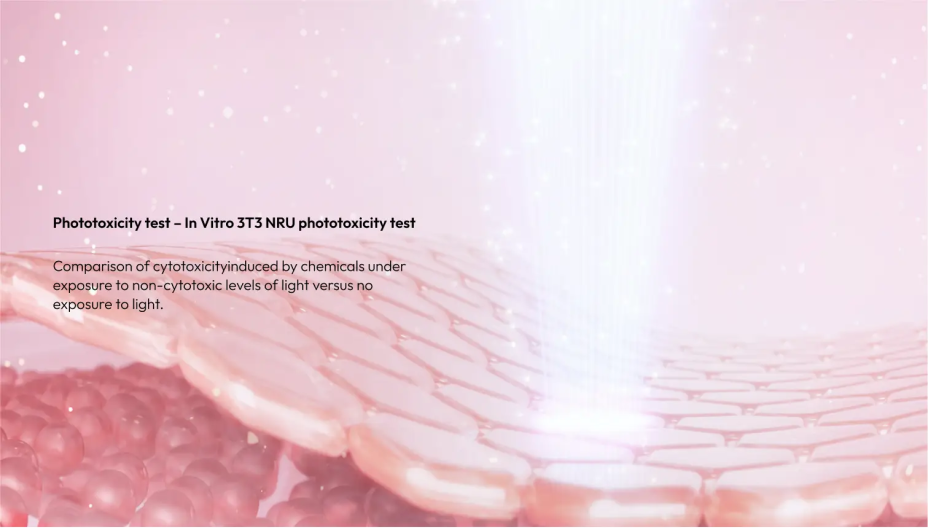
OECD Test Guideline 432, known as the In Vitro 3T3 Neutral Red Uptake (NRU) Phototoxicity Test, is designed to identify the phototoxic potential of chemicals that become toxic only when exposed to light.

This in vitro assay uses mouse fibroblast cells (3T3 cells) to assess whether a chemical causes toxicity under exposure to a light source, simulating solar radiation.
Purpose of the test

The test aims to determine if a substance is likely to cause damage to the skin or eyes when exposed to sunlight or other light sources, helping to ensure the safety of chemicals and products such as cosmetics, pharmaceuticals, and industrial substances.

Test Process
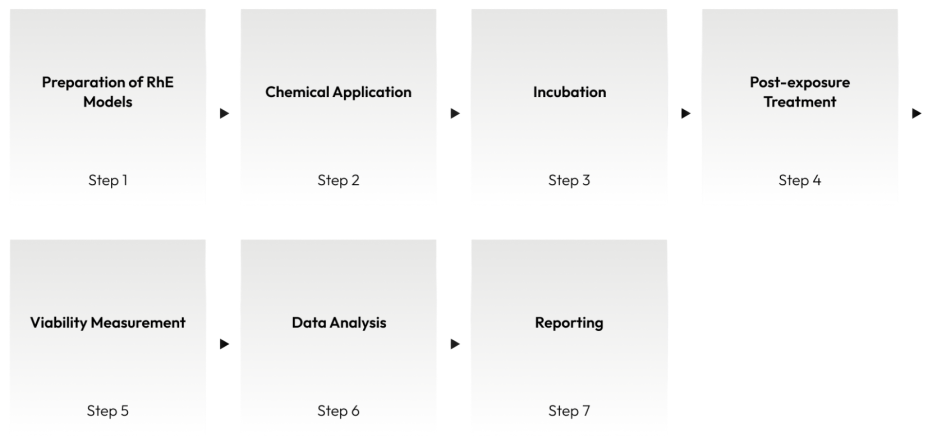
1. Preparation of RhE Models

  • Cultivate human epidermal cells to form a multi-layered, differentiated model that replicates human epidermis.

2. Chemical Application

  • Apply the test substances directly onto the RhE model.

3. Incubation

  • Allow the chemicals to interact with the epidermis for a specified duration, typically about 15 to 60 minutes,
    depending on the protocol.

4. Post-exposure Treatment

  • Rinse the chemicals off the RhE model and apply a viability dye such as MTT, which will be metabolized by living
    cells.

5. Viability Measurement

  • Measure the conversion of the dye to formazan by viable cells, which is quantified using a colorimetric assay to
    assess cell viability.

6. Data Analysis

  • Analyze the results to determine the reduction in cell viability compared to untreated control samples,
    indicating the irritant potential of the test substance.

7. Reporting

  • Prepare detailed reports including the methods, results, and conclusions for regulatory and safety assessment
    purposes.

Read out
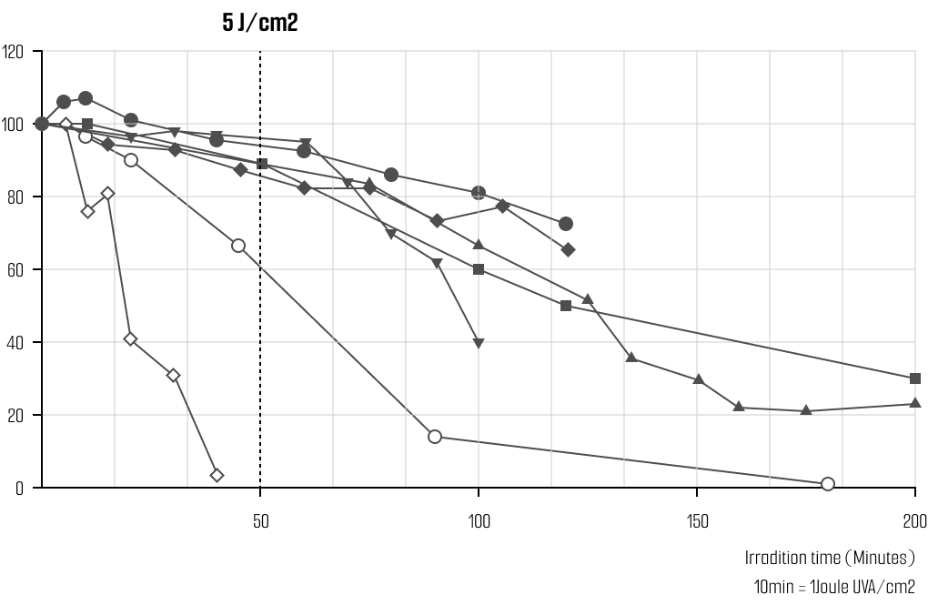
Cell viability (% Neutral red uptake of dark controls)

Trusted by Leading Innovators

Customer insight

Functional Testing of Anaerobic Microbes Using Organoids

Chong Kun Dang - better life through better medicine

“We have been developing products utilizing various bacterial strains and have explored multiple methods to evaluate the efficacy of our developed strains. However, due to the nature of obligate anaerobic bacteria, there were significant limitations in applying conventional in vitro efficacy evaluation methods. To overcome these challenges, we explored different testing approaches and discovered the ODISEI platform...

Customer insight

Advancing K-Beauty with Skin Organoids

Professor Lee Chang-seok Eulji University

“Advancing K-Beauty with Skin Organoids: A Next-Generation Platform for Non-Animal Testing and High-Precision Cosmetic Innovation With the global rise of K-beauty, the cosmetics industry continues to grow steadily. Since the ban on animal testing for cosmetics in Korea in 2017, various alternative testing methods have been adopted. However, many of these approaches have limitations in replicating the complexity...

Customer insight

HT-X1: A Label-Free Imaging Breakthrough for Organoid-Based Disease Modeling and Drug Screening

Tomocube (Spatial)

“Traditional microscopy methods often require fluorescent labeling to analyze cellular structures, which can be time-consuming and invasive. In contrast, our HT-X1 system allows for high-resolution visualization of cellular morphology without the need for any labeling, offering a clear advantage in live-cell imaging. To validate this capability, we conducted an organoid-based analysis using intestinal organoids...

Customer insight

Advancing Clinical Pathology with Spatial Protein Analysis

Seoul National University College of Medicine

“Traditional protein analysis has primarily focused on quantifying expression levels within tissue samples. However, recent advances in spatial analysis techniques have shifted attention toward evaluating not only expression levels, but also the spatial distribution, density, and proximity between proteins...

Customer insight

Revealing Immune-Boosting Potential with ODISEI-Gut

K Research Institute

“Among the many fermented foods we consume, kimchi is particularly known for containing a diverse range of lactic acid bacteria, which are believed to influence the activation of immune cells in the body. In our research institute, we successfully isolated a bacterial strain that appears to enhance immune cell function. To evaluate its effect in the intestinal environment, we utilized the ODISEI-Gut platform...

Customer insight

Multiplex Marker Analysis Enhances Research Efficiency with 31-Marker Detection on a Single Slide

Bundang Jesaeng General Hospital

“We conducted a study focused on identifying disease-related markers using patient-derived tissue samples. However, traditional methods limited our ability to analyze multiple candidate markers simultaneously, and the limited availability of clinical samples posed a consistent challenge...

Customer insight

Redefining Gastric Cancer Research with Patient-Derived Organoids

SOON CHUN HYANG UNIVERSITY HOSPITAL

“Gastric cancer is one of the leading causes of cancer-related mortality worldwide. It is a malignant solid tumor characterized by poor prognosis due to difficulties in early diagnosis and its rapid progression. Unlike many other solid tumors that primarily metastasize via lymphatic or hematogenous routes, gastric cancer most commonly spreads through the peritoneum....

Customer insight

Breast Cancer PDOs for TNBC Drug Development

GANGNAM SEVERANCE HOSPITAL

“Breast cancer is one of the most commonly diagnosed cancers among women worldwide. It is a complex and heterogeneous disease, with its progression and treatment response varying significantly depending on factors such as hormone receptor status, HER2 expression, and genetic background...

Customer insight

Transforming Gastric Cancer Treatment: Lambda Biologics’ PDOs Platform

SOON CHUN HYANG UNIVERSITY HOSPITAL

“Gastric cancer is one of the leading causes of cancer-related mortality worldwide. It is a malignant solid tumor characterized by poor prognosis due to difficulties in early diagnosis and its rapid progression. Unlike many other solid tumors that primarily metastasize via lymphatic or hematogenous routes, gastric cancer most commonly spreads through the peritoneum...

Customer insight

A Novel Drug Proven to Penetrate the Tumor Microenvironment

Autotelic bio

“Our newly developed drug differs from previously known therapeutics in that it directly penetrates various tumor tissues to exert its efficacy. Therefore, it was essential to analyze the drug’s penetration within the tumor microenvironment. To evaluate this, we conducted permeability testing in a co-culture system of tumor organoids and cancer-associated fibroblasts (CAF)...