Abstract
Physiological stress is linked to skin aging, hair greying, and hair loss, but its direct effects are poorly understood because relevant human models are lacking. Hair-bearing human skin organoids reproduce the main structures of native skin, including the epidermis, dermis, hair follicles, and melanocytes.
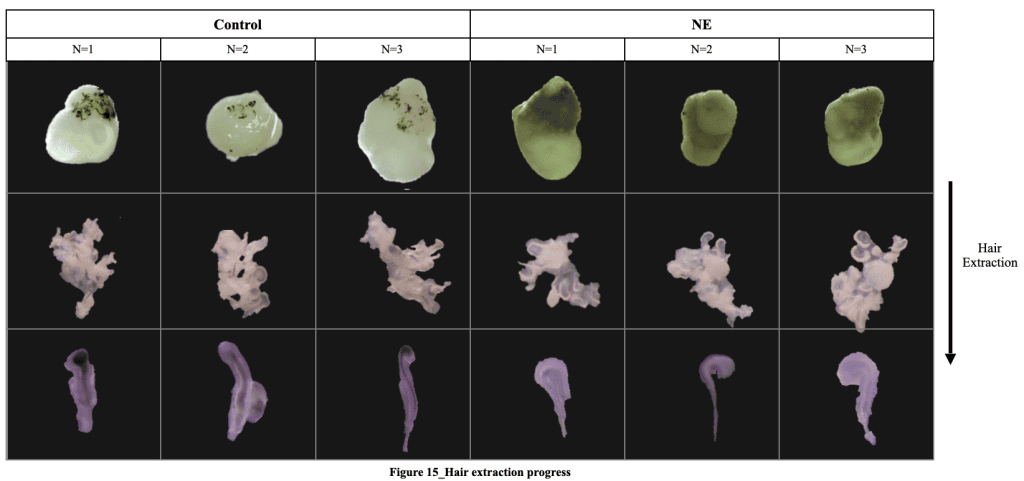
In this joint study by COSMAX BTI and ORGANOIDSCIENCES, hiPSC-derived skin organoids were cultured for 60–100 days and then treated with 100 µM norepinephrine for about two months to model stress-induced hair greying. Norepinephrine reduced KRT10 and Collagen I, cut PMEL expression by 70% and SOX2 by about 50%, and turned hair from black to grey. This points to disruption of the dermal papilla niche in the hair follicle. The results show that skin organoids are a realistic platform for studying stress-related skin and hair changes and for testing cosmetic ingredients.
Authors
Su-Jin Lim1,3, Seoyeon Kyung2, Hyunseok Kim1,4, Chaerim Park1, Dong-Youn Hwang1, Hyun-mun Kim1
1 ORGANOIDSCIENCES Ltd., Republic of Korea
2 COSMAX BTI, Republic of Korea
3 Department of Cosmetic Industry, Chungbuk National University
4 Lambda Biologics GmbH, Germany